Christmas Popup Ideas for Online Stores
Discover 12 practical Christmas popup ideas for your online store, including exit-intent rewards, gift guides, shipping incentives, email capture, and seasonal offers. Learn how to time, design, and measure popups without disrupting shoppers.
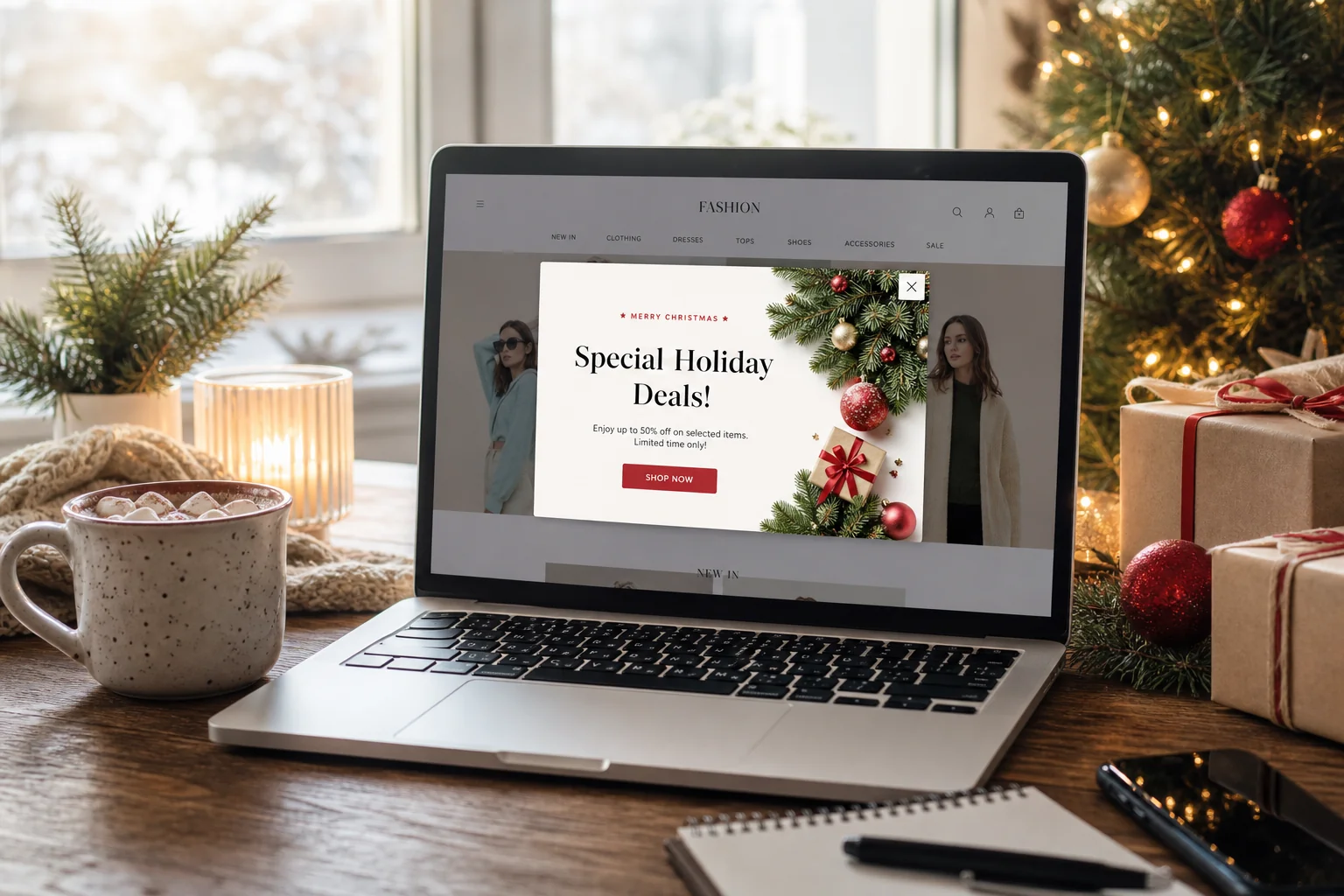
The Christmas shopping season brings more visitors to online stores, but increased traffic doesn't automatically translate into more purchases. Shoppers compare prices, browse gift collections, and sometimes leave without buying anything. The right Christmas popup ideas can help retailers capture attention, offer useful incentives, and encourage visitors to take the next step.
Overview
In this guide, we'll explore 12 practical holiday popup strategies, explain how to choose the right timing and incentives, and show how WooCommerce retailers can use gamification to support holiday engagement, email subscriptions, and conversions.
Why Christmas Popups Can
Improve Holiday Shopping Experiences
During the holiday season, online shoppers face an overwhelming number of promotions. Nearly every retailer advertises seasonal discounts, special bundles, or limited-time deals. A traditional banner can easily disappear into the background, particularly when visitors are comparing multiple stores.
Popups create an opportunity to communicate something valuable at a specific moment. A customer browsing gifts might appreciate a curated gift guide, while someone leaving a shopping cart could respond to a relevant incentive. The effectiveness of the popup depends on how well its message matches the visitor's situation.
The goal isn't simply to display more promotions. It's to create meaningful interactions that help customers make decisions, discover products, or complete purchases. This is also why timing, relevance, and restraint matter just as much as attractive holiday designs.
The Difference Between Helpful and Intrusive Popups
A helpful popup provides information or an incentive that relates directly to the customer's shopping experience. For example, a reminder about the final Christmas delivery date can help a shopper decide whether to place an order. Similarly, a small reward offered when someone is about to leave may provide an additional reason to reconsider their purchase.
An intrusive popup interrupts visitors before they've had a chance to explore the website, blocks important information, or repeatedly appears after being dismissed. These experiences can frustrate shoppers and interfere with their purchase decisions.
Google also advises website owners to avoid intrusive interstitials and dialogs, particularly when they prevent users from accessing page content. Seasonal promotions should complement the shopping experience rather than compete with it.
12 Christmas Popup Ideas
to Engage Holiday Shoppers
The most useful holiday popup strategies address specific customer needs. Some encourage first purchases, others support gift discovery, and several can help recover visitors who are considering leaving the store.
The following Christmas popup ideas include practical examples of messaging, incentives, and suggested display conditions. These are hypothetical campaign scenarios, not guaranteed conversion strategies or documented performance results.
1. Gamified Exit-Intent Popups With Christmas Rewards
<text weight="medium">Example headline: "Wait! Your Christmas Surprise Is Still Waiting."</text>
Instead of showing another conventional discount message, invite visitors who are about to leave to play a short game for a chance to receive a reward. Depending on the software, this could involve a virtual dice game, a prize reveal, or another interactive mechanic. Rewards might include a small discount, free shipping, or a qualifying gift offer.
This approach creates a moment of participation rather than immediately giving every departing visitor the same incentive. A store selling Christmas gifts could use a festive game with a clearly explained reward and a straightforward way to redeem it.
For WooCommerce retailers, some gamification tools offer exit-intent popups that invite departing visitors to play for a discount reward, and certain solutions can also support lead collection. Confirm the exact capabilities with your chosen tool before building a campaign around them.
2. Christmas Discount Popups for First-Time Visitors
<text weight="medium">Example headline: "A Little Christmas Gift for Your First Order."</text>
A welcome discount can help new visitors feel more comfortable purchasing from an unfamiliar store. Instead of immediately displaying a promotional window, consider waiting until visitors have explored a product or demonstrated some interest in the website. This gives them time to understand what the store offers.
For example, a retailer could provide 10% off a first purchase above a specified minimum order value. The message should clearly explain who qualifies, which products are eligible, and whether the promotion can be combined with other discounts.
Small incentives can be more sustainable than aggressive storewide promotions. Before launching, calculate their effect on margins and check whether the incentive addresses a real purchasing obstacle.
3. Free Shipping Popups to Encourage Larger Orders
<text weight="medium">Example headline: "You're Only €12 Away From Free Christmas Delivery!"</text>
Shipping charges can influence whether shoppers complete their orders. A popup or compact promotional message highlighting how close a customer is to a free-shipping threshold can make the offer more useful and immediately relevant.
For instance, a store offering free shipping above €60 could display a reminder when a customer's basket reaches €48. Rather than pushing an unrelated product, the store could recommend a small complementary item that helps the shopper reach the threshold.
The message should reflect the customer's actual cart value and applicable shipping conditions. Be careful not to imply that Christmas delivery is guaranteed simply because shipping is free.
4. Holiday Gift Guide Email Capture Popups
<text weight="medium">Example headline: "Still Searching for the Perfect Gift?"</text>
Not every holiday visitor is ready to buy. Some are looking for inspiration and may appreciate recommendations organized by recipient, interest, or budget. A downloadable or email-delivered gift guide can provide genuine value while creating an opportunity to grow a relevant subscriber list.
For example, a beauty retailer might offer a Christmas skincare gift guide featuring products for different skin types and price ranges. A pet retailer could offer gift recommendations for dog and cat owners.
The offer should match the audience's interests, and the signup experience must clearly explain what subscribers will receive. If future marketing emails are optional, customers should be able to make that choice separately from requesting the guide.
5. Christmas Countdown and Daily Deal Popups
<text weight="medium">Example headline: "Today's Christmas Surprise Ends Tonight."</text>
A countdown promotion can highlight offers that genuinely expire at a stated time. Rather than keeping the same discount visible throughout December, retailers can rotate featured products, seasonal bundles, or limited-time rewards.
For example, an online accessories store could showcase a different gift category each day during a 12-day Christmas promotion. Returning visitors would have a reason to discover new products without the store repeatedly promoting the same discount.
Use countdown timers only when the deadline is genuine. Automatically resetting a timer or implying false scarcity can undermine customer trust. A dedicated advent calendar requires additional campaign functionality beyond a basic popup.
6. Personalized Product Bundle Popups
<text weight="medium">Example headline: "Complete Their Christmas Gift With a Matching Set."</text>
Product bundles are particularly useful when customers are purchasing gifts. They simplify product selection and can make complementary items easier to discover. A popup suggesting a matching accessory or curated gift set may be more relevant than offering a generic discount.
Imagine a customer browsing a coffee maker. A related offer featuring a coffee sampler and reusable cup could provide a practical gift combination. For a skincare store, the equivalent might be a cleanser-and-moisturizer set.
Show these recommendations only when they are relevant to the product being viewed or purchased. The bundle should offer clear value, whether through convenience, thoughtful packaging, or a genuine price advantage.
7. Last-Minute Christmas Delivery Reminder Popups
<text weight="medium">Example headline: "Order by December 18 for Christmas Delivery."</text>
As Christmas approaches, delivery timing becomes increasingly important. A short message explaining the final recommended ordering date can help shoppers avoid disappointment and make faster decisions.
The deadline must be based on your actual fulfillment capacity, shipping destinations, and carrier information. If delivery dates differ by country or shipping method, make those conditions clear instead of using a universal promise.
After the final physical-delivery deadline passes, replace the message with relevant alternatives such as digital gift cards, local pickup, or other genuinely available delivery options.
8. Mystery Gift Popups for Qualifying Orders
<text weight="medium">Example headline: "A Mystery Christmas Gift Comes With Your Order!"</text>
Surprise rewards can add a playful element to holiday shopping. For example, customers spending more than €75 might receive an additional small item selected from a predefined collection of gifts.
Mystery offers work best when customers understand the basic conditions. Explain the minimum spending requirement, the nature of the possible rewards, and any restrictions before customers complete their orders.
Keep the cost of gifts predictable and make sure the products are available. The surprise should feel like an added benefit, not a reason to conceal important offer details.
9. Returning Customer Christmas Thank-You Popups
<text weight="medium">Example headline: "Welcome Back! Here's a Little Holiday Thank-You."</text>
Existing customers may appreciate recognition more than another general promotional message. A loyalty-focused holiday popup can provide an exclusive benefit, such as a limited-time reward, early access to a gift collection, or a complimentary item with a qualifying purchase.
This requires a tool capable of identifying eligible returning customers through an appropriate data source or customer segment. Avoid assuming that every popup platform can recognize purchase history or automatically personalize offers.
Thoughtful recognition can strengthen relationships with existing customers. For more ideas, consider how gamified rewards and memorable shopping experiences can fit into a wider customer engagement strategy.
10. Christmas Gift Card Popups for Undecided Shoppers
<text weight="medium">Example headline: "Not Sure What to Buy? Give Them the Choice."</text>
Gift cards are useful for shoppers who don't know which product, size, or style the recipient would prefer. They can also provide an alternative when the Christmas shipping deadline has passed.
A popup highlighting digital gift cards could appear on relevant gift pages or during the final days before Christmas. Keep the message simple and explain whether the gift card is delivered electronically, when it becomes available, and how it can be redeemed.
Only promote instant delivery when your store can actually fulfill it. For physical gift cards, standard shipping and processing conditions still apply.
11. Holiday Quiz and Gift Finder Popups
<text weight="medium">Example headline: "Find the Perfect Christmas Gift in Three Questions."</text>
An interactive gift finder can help customers navigate large product catalogs. A short quiz might ask who they're shopping for, what the recipient enjoys, and how much they want to spend before displaying relevant product suggestions.
For example, an outdoor equipment store could ask whether the recipient enjoys hiking, camping, or cycling. The resulting recommendations would lead shoppers toward appropriate products instead of requiring them to browse numerous unrelated categories.
This type of experience requires a suitable quiz or product recommendation tool. It should not be confused with a basic exit-intent reward game, which serves a different purpose.
12. Post-Purchase Christmas Rewards
<text weight="medium">Example headline: "Thanks for Shopping! Here's a Reward for Your Next Visit."</text>
Holiday engagement doesn't have to end when customers complete an order. A small reward shown on the order confirmation page can encourage a future visit or help customers discover complementary products.
For instance, a store could offer a clearly defined coupon for a subsequent purchase, valid during a stated period after Christmas. This approach may be particularly useful for categories where repeat purchasing is common.
Avoid interrupting the payment or checkout process with additional offers. Post-purchase messages belong after the transaction is confirmed, and their impact should be evaluated based on actual subsequent orders rather than coupon claims alone.
Choose the Right Christmas
Popup Ideas for Each Visitor
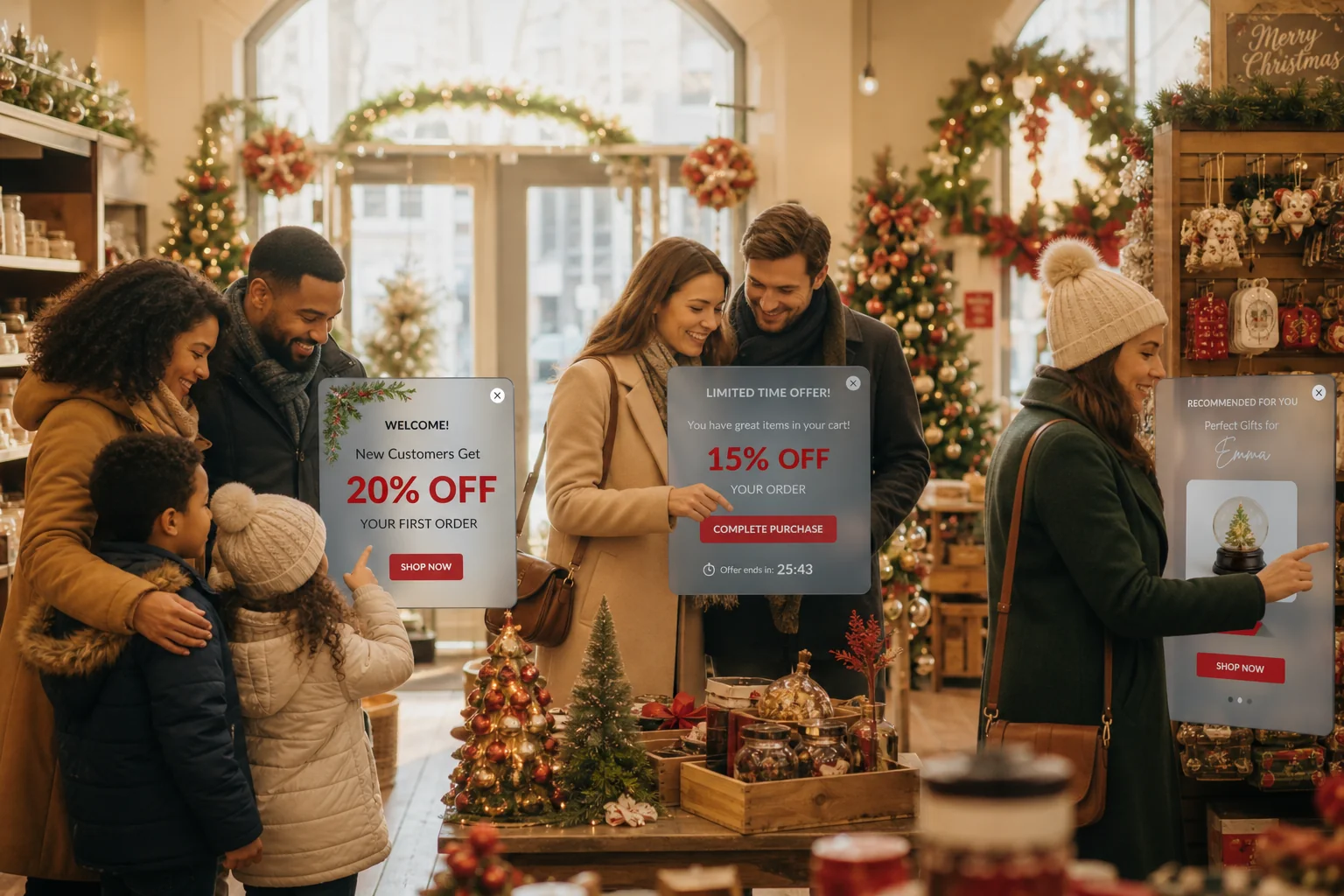
Showing every visitor the same promotion ignores an important reality: customers arrive at different stages of the buying process. A first-time visitor exploring your catalog has different needs from someone who has already added several products to their cart.
A useful popup strategy starts by identifying the behavior or context that should trigger each message. Not all tools support every trigger, so choose software that matches your intended campaign before building the design.
Consider the following display approaches:
-
Exit-intent: Present a relevant incentive when a visitor appears ready to leave, where reliable detection is supported.
-
Browsing engagement: Show a gift guide or welcome offer after meaningful interaction with the store.
-
Cart conditions: Highlight free shipping thresholds, bundles, or eligible rewards based on the customer's basket.
-
Returning visitor targeting: Display a different message to eligible repeat visitors when the required customer information is available.
-
Seasonal deadlines: Show shipping reminders or time-limited promotions only while the information remains accurate.
These conditions should be treated as alternatives, not invitations to display several popups in succession. Prioritize the message that provides the most useful information at that moment.
Exit-Intent vs. Timed Popups
Exit-intent and timed popups serve different purposes. Exit-intent prompts are designed to engage visitors who appear ready to leave, while timed popups appear after a specified period regardless of whether someone intends to depart.
A visitor who has spent time exploring gift ideas may appreciate an offer before leaving. However, someone who is reading product specifications might find a timed interruption distracting, even if they've been on the page for several minutes.
Exit-intent signals are generally more straightforward to detect with desktop pointer movements. Mobile devices behave differently, so mobile exit-intent functionality depends on the specific software and supported signals. Always test actual behavior on both device types.
Design Festive Popups That
Shoppers Want to Engage With
Festive popup design should reflect your brand without overwhelming the interface. Christmas colors, seasonal illustrations, and subtle decorative details can make a campaign recognizable, but the offer itself must remain the most important element.
The strongest Christmas popup ideas communicate one clear benefit and provide an obvious next step. Visitors should immediately understand what they can receive, what action is required, and whether the promotion has any important restrictions. A complicated layout can make even an attractive offer less effective.
For example, a short headline such as "Unwrap Your Christmas Reward" can be paired with a concise explanation and a clear participation button. If the popup offers a specific discount, display the eligibility conditions close to the call to action rather than hiding them elsewhere.
Keep Holiday Popup Copy Short and Specific
Holiday shoppers often move quickly between products and stores. Your popup copy should therefore communicate value without requiring visitors to read several promotional paragraphs.
A message such as "Get 10% Off Your First Gift Order Over €50" tells customers more than a vague promise of an exclusive Christmas surprise. It identifies the incentive, intended audience, and minimum spending requirement in one sentence.
Use urgency only when there is a genuine reason to act quickly. Clearly defined deadlines and limited stock can be helpful information, but exaggerated or misleading claims weaken trust.
Make Popups Mobile-Friendly and Accessible
On smaller screens, a popup needs sufficient room for the offer, readable text, and an easy-to-use dismissal control. Avoid designs that cover the entire shopping experience unnecessarily or require excessive scrolling before visitors can close the message.
Buttons should be easy to tap, forms should request only necessary information, and interactive elements should work with keyboard navigation where applicable. A popup should also return focus appropriately when dismissed so customers can continue browsing.
Test popup behavior on real devices and screen sizes before launching. Pay particular attention to product pages, cart pages, and any areas where an interruption might interfere with purchasing.
Use Christmas Popups to
Capture Email Leads Responsibly
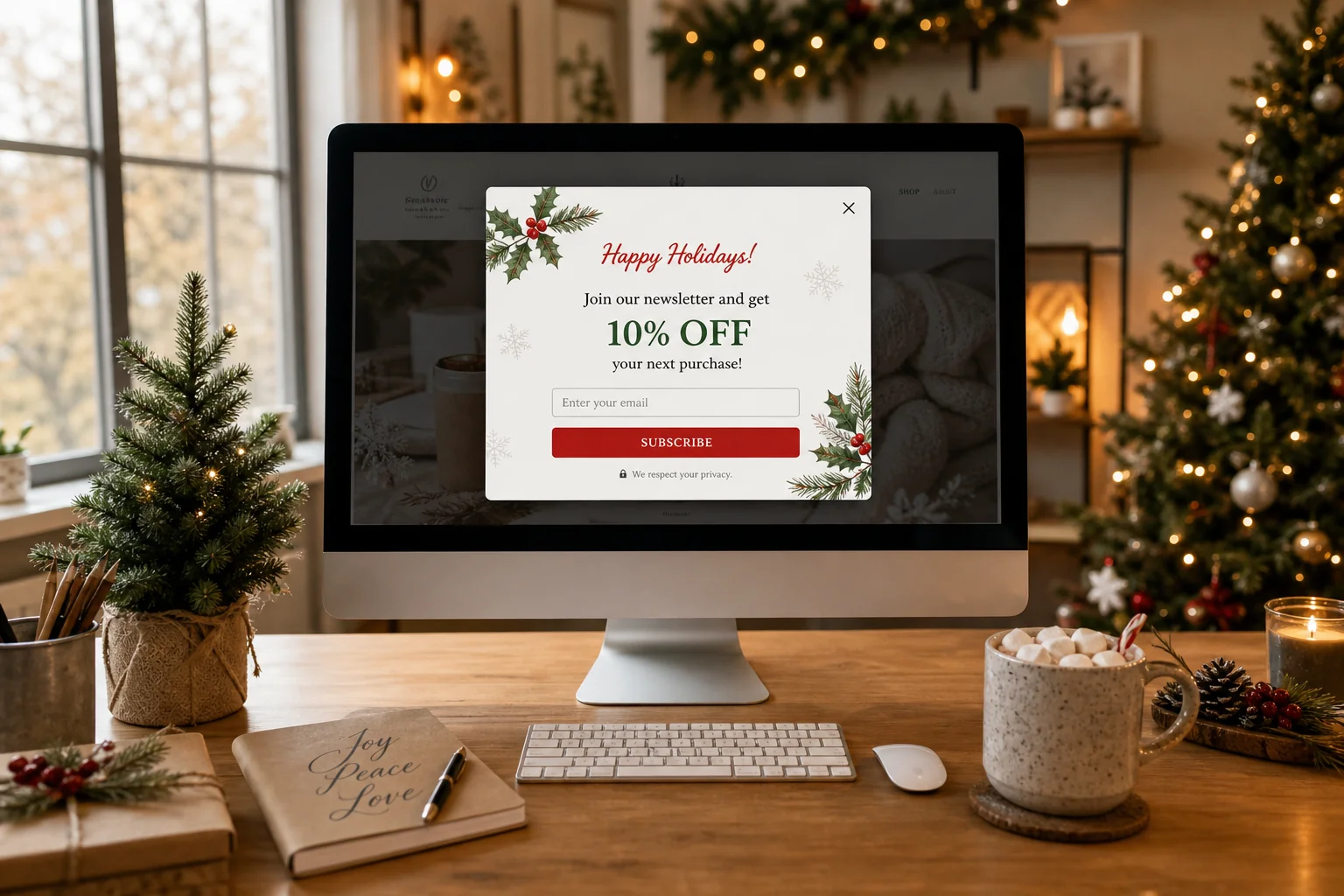
The holiday season can be an opportunity to introduce new visitors to your brand. A relevant signup incentive gives customers a reason to share their email addresses, while subsequent communications can help maintain the relationship after the promotion ends.
However, collecting email addresses and obtaining permission for marketing communications are not always the same thing. If a customer provides an address to receive a reward or gift guide, that action should not automatically be treated as permission for unrelated promotional emails.
The European Commission's guidance on direct marketing explains that organizations must consider GDPR requirements alongside applicable ePrivacy rules. Make the purpose of data collection clear, use an appropriate lawful basis, and provide a straightforward way to withdraw consent or object where required.
Build a Relevant Post-Christmas Email Strategy
New subscribers acquired in December may be interested in more than a single holiday discount. Depending on what they signed up for, useful follow-up content might include product care tips, complementary product recommendations, or relevant seasonal collections.
For example, someone who requested a skincare gift guide may appreciate educational content about skincare routines, provided the business has an appropriate basis to send that communication.
A longer-term approach to gamification in email marketing can help businesses think beyond one-time coupon distribution. The goal is to build an engaged audience rather than simply collecting as many email addresses as possible.
How to Implement
Christmas Popups in WooCommerce
WooCommerce store owners can combine standard promotional functionality with a suitable popup solution. The underlying store manages products, checkout, and coupons, while the popup tool determines how the promotional message or interactive experience is presented.
Before installing additional software, define exactly what the campaign needs. A simple gift guide signup form, a personalized product recommendation quiz, and a gamified exit-intent popup require different capabilities. Choosing the tool after deciding on the customer experience helps avoid unnecessary integrations.
Set Up and Test Christmas Coupon Offers
WooCommerce includes built-in coupon management functionality. In the WordPress dashboard, locate the WooCommerce coupon management area to create percentage or fixed-value discounts, after ensuring coupon usage is enabled. Consult the current WooCommerce documentation for the exact menu location in your version.
You can configure product restrictions, minimum spending requirements, usage limits, and coupon expiration settings. The official WooCommerce coupon documentation explains these options and how they work.
For holiday campaigns, test the entire coupon journey before publishing. Verify that discounts apply to the intended products, interact correctly with existing sale prices, and cannot be redeemed outside their stated conditions.
If your popup distributes rewards, also test how customers receive and redeem them. An engaging interaction loses its value when the resulting code fails at checkout.
Add Gamified Exit-Intent Rewards With Funnelsio
For stores interested in interactive exit-intent offers, a gamification solution that integrates with WooCommerce can use game mechanics to give departing visitors an opportunity to receive discount rewards, rather than displaying an ordinary static coupon message. Verify integration support with your specific tool.
Depending on the gamification tool you choose, you may be able to customize widget elements such as text, colors, and promotional codes, and target or exclude specific pages. Many tools also provide performance information related to popup activity, leads, and purchases tied to generated coupons, so check which metrics your solution reports.
This makes the platform relevant for holiday campaigns focused on engaging abandoning visitors and collecting potential customer leads. It is not a general-purpose popup builder for every idea described above, and businesses needing quizzes, countdown calendars, or advanced product recommendation experiences should verify those capabilities in their chosen tools.
Importantly, gamified incentives should complement a well-functioning store. If shoppers abandon purchases because of confusing shipping fees, payment failures, or an unnecessarily complicated checkout, improving the WooCommerce purchase experience may be more valuable than introducing larger rewards.
How to A/B Test
and Measure Christmas Popup Performance
Creative design alone cannot establish whether a holiday popup is successful. Store owners should measure how visitors respond to the message and whether the interaction contributes to meaningful business outcomes.
Comparing different Christmas popup ideas through A/B testing can help identify which offers, headlines, and display conditions are most effective. For example, one group of eligible visitors might see a fixed discount, while another receives an opportunity to play for a reward. The comparison should use a consistent audience, measurement period, and clearly defined primary objective.
Track the Metrics That Matter
Start by defining the purpose of each popup. A campaign focused on email subscriptions should prioritize qualified signup rates, while an exit-intent promotion designed to encourage purchases should measure purchases and their associated value.
Useful metrics include popup impression counts, engagement rate, email signup rate, coupon redemption rate, purchase conversion rate, average order value, and revenue per eligible visitor. For each rate, specify the denominator so comparisons remain meaningful.
For example, a popup with a high game participation rate may not generate profitable orders if the rewards are too generous. Conversely, a less frequently engaged popup might attract visitors who are more likely to complete a purchase.
Funnelsio offers widget performance tracking, including leads and purchases associated with generated coupons. Businesses can complement this information with appropriately configured e-commerce analytics to evaluate broader customer behavior.
Test One Meaningful Variable at a Time
A/B testing is most useful when the variations answer a specific question. You might compare a Christmas-themed reward message against a straightforward discount message while keeping the offer and display conditions unchanged.
If you simultaneously change the design, discount amount, placement, and timing, it becomes difficult to determine which difference influenced the result. Use comparable traffic groups and allow enough observations to make the findings useful.
Avoid declaring success based on a handful of conversions or a short-lived increase in engagement. Seasonal demand, advertising campaigns, changing inventory, and other promotions can influence results. A controlled test helps distinguish the popup's contribution from changes that would have happened anyway.
Common Christmas Popup
Mistakes to Avoid
One of the most frequent mistakes is offering discounts to visitors who were already likely to buy. If a customer is actively completing checkout, displaying an additional coupon can unnecessarily reduce revenue or distract them from the transaction. Reserve recovery incentives for relevant situations and make sure the promotional cost is justified.
Another issue is excessive frequency. A shopper who dismisses a popup shouldn't immediately encounter the same offer on the next page. Appropriate frequency limits and dismissal behavior can help make the experience less frustrating, provided the chosen tool supports them.
Retailers should also avoid inconsistent promotional conditions. A banner advertising one discount while a popup promises another can confuse visitors, especially when coupon stacking rules are unclear. Coordinate seasonal promotions across the website, email campaigns, and advertising.
Finally, don't let festive graphics distract from basic usability. A popup needs to load reliably, display properly on mobile, and explain its offer clearly. The best design is one that supports the customer's decision rather than forcing attention toward the promotion.
Conclusion: Make Christmas Popups
Helpful, Relevant, and Engaging
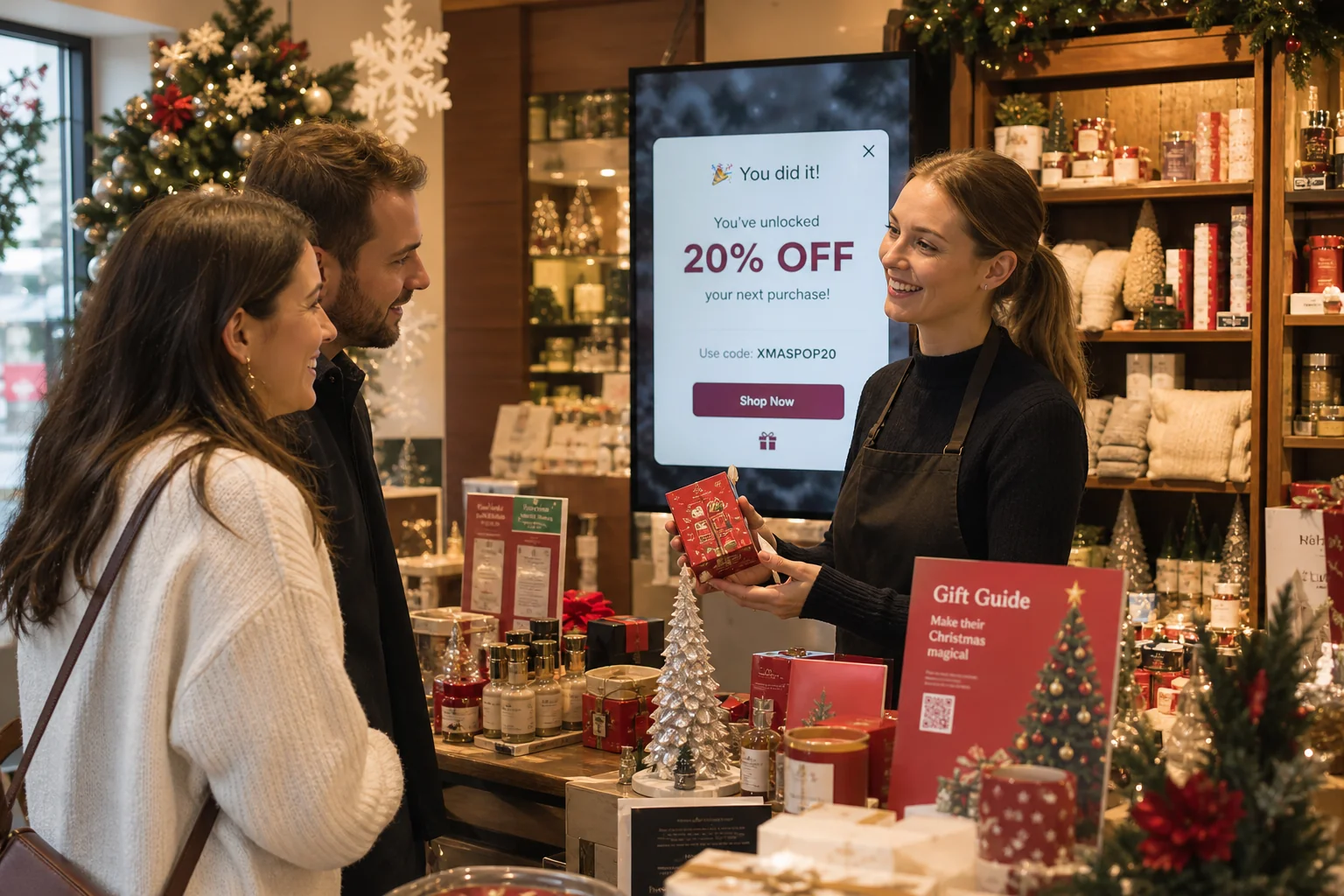
Well-designed Christmas popup ideas can turn ordinary promotional messages into more useful shopping interactions. A seasonal discount might encourage a first purchase, a gift guide can simplify product discovery, and a gamified reward can provide one more reason for a departing visitor to engage with your store.
The best approach combines relevant incentives, thoughtful timing, mobile-friendly design, and reliable measurement. Start with a clear campaign objective, avoid overwhelming visitors with repeated promotions, and test whether the experience supports purchases and profitable customer relationships.
For WooCommerce retailers who want to introduce an interactive element to their holiday promotions, Funnelsio's gamification solution offers a way to engage abandoning visitors with game-based discount rewards. Explore the available options and consider whether exit-intent gamification fits your Christmas conversion strategy.
Questions
Answered
Common questions related to this topic.
What are christmas popup ideas?
Christmas popup ideas include various interactive elements designed to engage visitors during the holiday season. These can range from festive discounts and gamified experiences to product promotions and email capture forms. For instance, a spin-to-win popup can offer users a chance to win discounts, enhancing engagement.
How can I create effective holiday popups?
To create effective holiday popups, focus on eye-catching design and clear messaging. Use festive themes and concise text that highlights the offer. Additionally, consider using exit-intent technology to present popups just as users are about to leave, increasing the chances of conversion.
Can popups negatively impact user experience?
Yes, poorly designed popups can negatively impact user experience if they are intrusive or appear too frequently. However, when implemented thoughtfully, such as using timed or targeted popups, they can enhance engagement without overwhelming users. Timing and context are key to their effectiveness.
Why should I use gamification in my holiday popups?
Gamification in holiday popups increases user engagement by making the shopping experience interactive and fun. Techniques like quizzes or spin-the-wheel games can incentivize users to participate, often resulting in higher conversion rates. This approach also encourages sharing, further spreading brand awareness.
When is the best time to display popups during the holiday season?
The best time to display popups is during peak shopping hours, such as late afternoons or weekends, when traffic is high. Additionally, consider timing them around specific sales events or holidays, like Black Friday or Cyber Monday, to maximize visibility and relevance.
Should I conduct A/B testing for my holiday popups?
Absolutely! Conducting A/B testing allows you to compare different versions of your popups to see which performs better. Testing various elements, such as design, copy, and timing, helps optimize your popups for maximum conversion rates, ensuring that your holiday promotions are as effective as possible.
Ready To GrowThis Into Results?
Discover 12 practical Christmas popup ideas for your online store, including exit-intent rewards, gift guides, shipping incentives, email capture, and seasonal offers. Learn how to time, design, and measure popups without disrupting shoppers.
Prefer to reach out directly? We'll get back to you as soon as possible.
Contact MASS DATA Today