Gift Card Promotion Ideas for Online Stores Before and After Christmas
Explore practical gift card promotion strategies for online stores before and after Christmas. Learn how to market digital gift cards, structure profitable bonus offers, support Boxing Day redemption, and measure performance without double-counting revenue.
The final weeks of the holiday shopping season create a familiar challenge for online retailers: customers still need gifts, but delivery deadlines are approaching and choosing the right products becomes increasingly difficult. A well-planned gift card promotion offers a practical alternative, allowing shoppers to give something meaningful without having to select a specific product, size, or style.

Overview
However, successful gift card marketing requires more than adding a digital voucher to your product catalog. The offer needs clear terms, convenient purchasing and redemption, appropriate promotional incentives, and a strategy for engaging recipients. This guide explores practical ideas for before and after Christmas, including WooCommerce implementation, bonus offers, email marketing, and customer engagement strategies.
Why Gift Card Promotions
Work During the Holidays
Gift cards address a common problem in holiday shopping: uncertainty about what someone else wants. A customer may know which store a friend enjoys but have no idea which product to choose. A prepaid gift card makes the decision easier by allowing the recipient to select something that suits their preferences.
For online retailers, gift card promotion campaigns can serve two audiences simultaneously. The purchaser is looking for a convenient gift, while the recipient may become a future customer. This creates an opportunity to connect with people who might not otherwise have visited the store, although receiving a gift card does not guarantee a repeat purchase or long-term loyalty.
Gift cards also offer an alternative when physical shipping becomes impractical. Digital versions can often be delivered electronically, depending on the platform and its processing rules. This can extend the useful holiday shopping period without making unsupported promises about physical delivery.
Digital Gift Cards vs. Physical Gift Cards
Digital gift cards, often called e-gift cards, are delivered electronically through an email or another supported method. They generally include a unique code or account credit that the recipient can redeem when purchasing eligible products. Depending on the platform, customers may also be able to select a delivery date or include a personalized message.
Physical gift cards provide a tangible item that can be wrapped and presented like a traditional gift. They can work well for retailers with physical stores, but production, packaging, and shipping introduce additional costs and delivery deadlines.
For e-commerce businesses prioritizing last-minute holiday purchases, digital cards are often the more practical option. However, retailers should verify how quickly their platform issues and delivers them before advertising instant availability.
Gift Card Promotion
Ideas Before Christmas
The period leading up to Christmas offers several opportunities to make gift cards more visible and attractive. Early in the season, shoppers may appreciate personalization and thoughtful gift presentation. As shipping deadlines approach, convenience and electronic delivery become increasingly important.
The strongest gift card promotion ideas reflect these changing priorities instead of repeating the same discount throughout December. Stores can combine practical gift suggestions, additional-value incentives, and relevant email campaigns without making the gift card itself unnecessarily complicated.
1. Promote E-Gift Cards as Last-Minute Christmas Gifts
Digital gift cards can be particularly useful after the final recommended ordering date for physical products. Instead of continuing to promote gifts that may arrive too late, retailers can direct customers toward an electronically delivered alternative.
For example, an online fashion store could feature a message such as "Still Need a Christmas Gift? Let Them Choose Their Favorite Style." The promotion could lead directly to a digital gift card page with clearly displayed values and delivery information.
The message should explain whether delivery is immediate or scheduled and whether additional payment verification may delay issuance. If digital gift cards are not delivered automatically, avoid promising that recipients will receive them within minutes.
2. Offer a Bonus Gift Card With Qualifying Purchases
A bonus offer can provide additional perceived value without directly reducing the advertised price of the primary gift card. For example, a hypothetical retailer could offer a €10 promotional bonus when a customer purchases a €50 gift card.
This approach can make the offer more attractive, but the additional value represents a real financial commitment. The retailer needs to establish who receives the bonus, what purchases qualify, when it can be redeemed, and whether it has separate conditions from the purchased card.
A particularly useful approach is to distinguish between the original prepaid value and the promotional reward. This helps customers understand the offer and allows the business to manage restrictions and reporting more accurately.
3. Create Personalized Christmas Gift Cards
One reason shoppers hesitate to give gift cards is that they may feel less personal than a carefully selected product. Customization can help address that concern by making the gift more thoughtful and appropriate for the occasion.
Depending on the platform, retailers can offer different holiday designs, recipient names, personalized messages, and scheduled delivery dates. A beauty store might provide festive card designs, while a specialist bookstore could offer options featuring different reading themes.
Personalization should remain simple. Customers should be able to complete the purchase without having to navigate unnecessary customization steps, particularly when buying a gift at the last minute.
4. Feature Gift Cards in Holiday Gift Guides
Gift cards shouldn't be hidden in the website footer or treated as an afterthought. They can be included naturally in holiday shopping guides alongside physical products, curated gift sets, and other relevant recommendations.
For example, a store could organize a gift guide by budget, recipient, or interest. Within a collection of gifts for coffee enthusiasts, a store-specific gift card could appear as an option for customers who prefer to let the recipient choose their own coffee or equipment.
This positioning makes the gift card relevant to a specific shopping need rather than presenting it as a generic alternative to every product in the store.
5. Combine Gift Cards With Complementary Products
Some businesses can create attractive gift packages by combining a prepaid card with a related physical item. A bookstore might offer a gift card alongside a bookmark, while a beauty retailer could pair a card with a small cosmetic accessory.
The additional product provides something tangible to unwrap while preserving the flexibility of the gift card. This can be useful for shoppers who want a more complete gift presentation but aren't confident choosing a specific product.
Before launching bundles, calculate the combined cost and ensure that the presentation clearly identifies the prepaid value of the card. A promotional package should not make customers guess how much credit the recipient will actually receive.
How to Structure a
Profitable Gift Card Bonus Offer
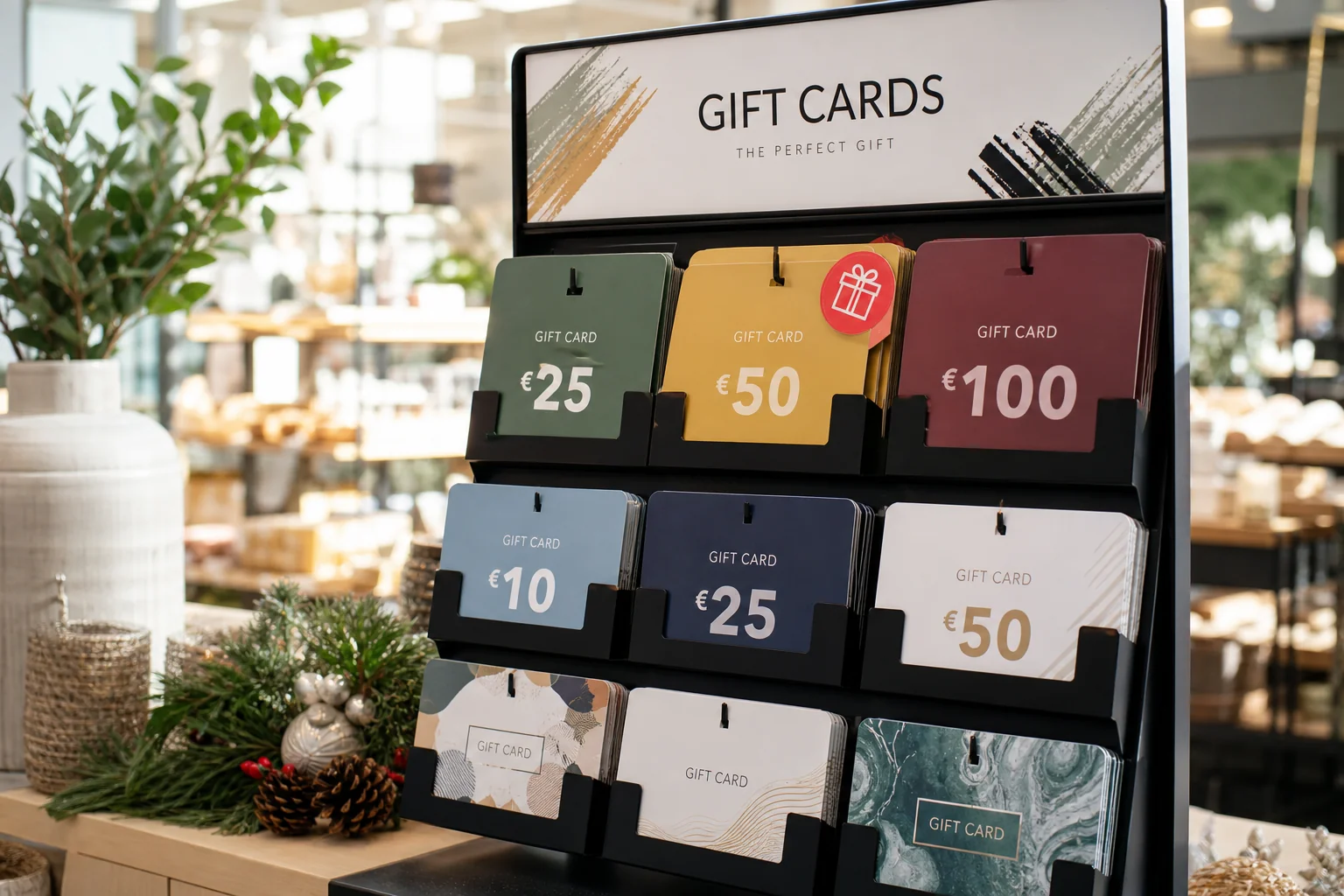
A gift card bonus offer can encourage purchases, but retailers need to understand its economics before choosing the incentive. Unlike a conventional product discount, a prepaid gift card represents an obligation to provide goods or services when it is redeemed.
Consider a hypothetical promotion offering a €10 bonus with the purchase of a €50 gift card. The customer pays €50, but the business may eventually need to honor €60 in purchasing value, depending on the conditions of the bonus. This is not the same as earning €50 in unrestricted profit.
The true cost depends on redemption behavior, product margins, eligible categories, and any restrictions attached to the promotional reward. Businesses should evaluate those factors rather than choosing a bonus amount solely because it sounds attractive.
Separate Purchased Value From Promotional Credit
The original purchased gift card and any additional promotional credit should be distinguishable in the platform's records. For example, the €50 prepaid value could remain subject to the standard gift card terms, while the €10 promotional bonus could operate under separately disclosed conditions, where legally permitted.
This separation helps prevent confusion when customers check balances or attempt to redeem the offer. It also allows the retailer to analyze how much promotional credit is issued and subsequently used.
The rules should be communicated before checkout. If the bonus can only be redeemed during a certain period or on selected products, those conditions must be clearly disclosed and comply with applicable local law.
Avoid Overly Aggressive Incentives
Large bonuses may increase interest in the promotion, but they can also weaken profitability. If customers primarily purchase gift cards because of the bonus, the business may be creating additional financial obligations without generating enough incremental value.
A smaller reward, a complementary product, or exclusive access to a collection may provide a more sustainable alternative. The most appropriate incentive depends on the product catalog, customer behavior, and commercial objectives.
Where possible, compare promotional performance against a suitable control group. Higher gift card purchase volume doesn't automatically mean the campaign produced greater profit.
Gift Card Promotion
Strategies After Christmas
Gift card marketing doesn't need to stop on December 25. The period immediately after Christmas brings a different audience into focus: people who have received cards and are considering how to use them.
A post-Christmas gift card promotion should make redemption straightforward and help recipients discover products they genuinely want. This is especially important when someone has received a card for a store they haven't previously visited.
Retailers can also coordinate gift card redemption with Boxing Day offers and January collections. However, the communication should make clear that gift cards are a payment method, while promotional coupons or bonus credits may have separate eligibility conditions.
6. Create a Boxing Day Gift Card Redemption Campaign
Boxing Day, December 26, is associated with post-Christmas shopping promotions in markets such as the United Kingdom. Retailers operating in those markets can introduce eligible gift card recipients to selected sale collections and relevant seasonal products.
For example, a fashion retailer might highlight winter clothing and accessories that can be purchased using existing gift card balances. The message could emphasize product discovery and easy redemption rather than suggesting that gift cards automatically provide an additional discount.
Check whether your platform permits gift cards to be used alongside sale prices or promotional coupons. Restrictions should be communicated clearly before customers reach checkout.
7. Help New Recipients Discover Your Store
A gift card recipient may have little familiarity with your brand. Instead of immediately sending more promotional messages, make the first shopping experience welcoming and easy to navigate.
A dedicated redemption page can explain how to use the card, where to check the balance, and what happens when the order total exceeds the available credit. Product recommendations organized by interest or price range can also reduce the effort required to find something suitable.
For example, a homeware retailer might feature collections of everyday essentials, seasonal decorations, and accessories at different price points. This gives the recipient several starting points without forcing them into a particular product category.
8. Introduce a January Return-Visit Incentive
After Christmas, retailers may want to encourage shoppers to return for a second order. A carefully designed promotional reward can support this objective when its timing and conditions make commercial sense.
For instance, a store could test a separate future-purchase reward for eligible customers who complete their first order during the holiday season. The offer should be evaluated against the contribution profit generated by subsequent orders, not simply the number of rewards issued.
This approach fits into a wider customer retention strategy. Useful gamified rewards and customer loyalty techniques can help businesses think about engagement beyond a single discount or seasonal sale.
How to Sell and
Manage Gift Cards in WooCommerce
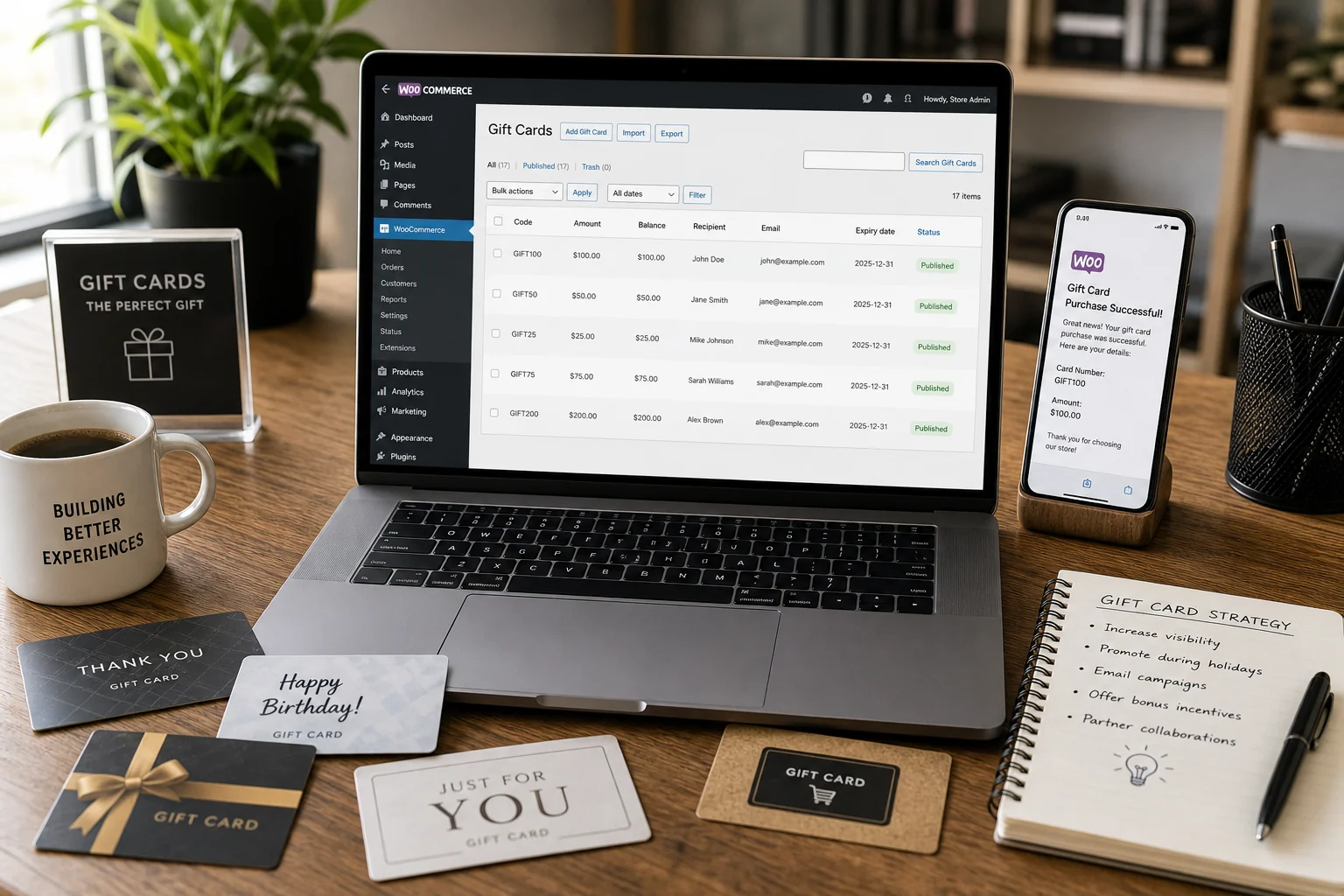
WooCommerce provides the foundations for selling products, managing orders, and accepting payments, but its core functionality does not include a complete built-in system for selling and redeeming gift cards as prepaid balances. Store owners generally need an appropriate extension or custom integration.
WooCommerce offers an official Gift Cards extension, along with third-party options, that can add prepaid digital gift certificate functionality to a store. Review the current feature list for any extension before relying on specific capabilities such as recipient delivery or redemption at checkout. Other extensions offer additional approaches to store credit, gift certificates, and promotional vouchers.
Before choosing a solution, decide whether your store needs fixed-value cards, customer-selected amounts, scheduled email delivery, partial redemption, customizable designs, or additional reporting functionality. These requirements determine which extension is most suitable.
Set Up Digital Gift Cards
With a compatible extension installed, create the gift card products and configure the available amounts. Depending on the extension, customers may be able to select a recipient, add a message, and schedule delivery.
WooCommerce's official Gift Cards documentation describes how to configure and use the extension. Consult the current documentation for your installed version to confirm how gift card codes are generated and redeemed. Features and settings depend on the extension used, so the store's actual configuration should be tested rather than assumed.
Check the delivery email carefully. It should clearly identify the gift card value, provide the information needed for redemption, and explain where recipients can find the applicable terms.
Test the Complete Redemption Experience
A gift card campaign can generate interest but still disappoint customers if redemption is confusing or unreliable. Before launching, complete a test purchase and verify that the correct amount is issued and delivered to the intended recipient.
Check whether partial redemption is supported, how remaining balances are handled, and whether customers can combine the card with other payment methods. Also verify behavior when a payment fails, an order is refunded, or a card is applied to an ineligible product.
Finally, test redemption on mobile devices. Customers should be able to enter their gift card code and understand the remaining amount due without unnecessary steps.
Gift Cards on Shopify and Other Platforms
Shopify also provides gift card functionality for merchants. Review Shopify's official gift card documentation to confirm how gift card products are configured and managed on your plan before building a campaign around them.
Different platforms may handle redemption, payment combinations, and promotional discounts differently. A workflow that works in one e-commerce system should not automatically be assumed to work in another.
Regardless of the platform, focus on the same fundamentals: accurate balances, reliable delivery, straightforward redemption, clear conditions, and dependable reporting.
Promote Gift Cards Through Email,
Website Content, and Social Media
Even a well-designed gift card product needs visibility. Shoppers should be able to find it when browsing holiday gift ideas, searching for last-minute options, or exploring the store after Christmas.
A coordinated gift card promotion works best when its messaging changes with the shopping calendar. Before Christmas, emphasize gift choice, personalization, and verified delivery options. After Christmas, help recipients discover products and understand how to redeem their cards.
Keep the messages consistent across channels. An email advertising a promotional bonus should not send customers to a product page that displays different conditions.
Use Email Marketing for Different Shopping Intentions
Before Christmas, email campaigns can focus on last-minute gift shoppers, existing customers looking for gift ideas, and subscribers interested in a particular product category.
For example, a gift card email might use the subject line "Not Sure What to Give? Let Them Choose." The body could explain available values, delivery options, and how recipients redeem the card.
After Christmas, communication can shift toward eligible recipients and customers who have chosen to receive marketing messages. Helpful product recommendations, balance information, and relevant seasonal collections are more useful than repeatedly asking customers to purchase another gift card.
The principles behind gamification in email marketing can also help retailers design more engaging promotional journeys, although email automation and segmentation require appropriate marketing tools and permissions.
Make Gift Cards Easy to Find on Your Website
Gift cards should be accessible through intuitive website navigation, relevant gift collections, and seasonal promotional content. A dedicated product page can explain available amounts, delivery methods, redemption rules, and any personalization features.
As Christmas approaches, the store might replace physical gift delivery messages with a prominently displayed digital gift card option. However, this should happen only when the platform can deliver the cards within the advertised timeframe.
On mobile devices, keep the purchasing process simple. Customers should not need to navigate several unrelated pages to choose an amount, enter recipient information, and complete checkout.
Use Gamified Popups to Support Holiday Engagement
Interactive promotions can complement gift card campaigns, especially when visitors are exploring the store but appear ready to leave without purchasing. Instead of displaying another conventional discount, retailers can invite eligible visitors to participate in a short game for a chance to receive a reward.
For example, a retailer could use an interactive reward during the holiday shopping season while promoting digital gift cards elsewhere on the website. The reward should be coordinated with the store's existing pricing and promotional rules.
Funnelsio is not a gift card management platform, and its standard coupon rewards should not be presented as prepaid gift cards. Gift card issuance, balance tracking, and redemption require the appropriate e-commerce functionality.
Gift Card Terms, Expiration
Rules, and Customer Trust

Gift cards represent a financial commitment, so retailers need to communicate their conditions clearly. Customers should know what they are purchasing, where the card can be used, whether partial redemption is possible, and how they can check the remaining balance.
Expiration policies deserve particular attention. Rules vary between countries, and some jurisdictions impose minimum validity periods or restrictions on fees. Businesses should not assume they can assign any expiration date simply because their software allows it.
Consumer protection guidance in the EU indicates that validity periods for gift vouchers are not harmonized across all member states. Verify the applicable rules for your markets with current, authoritative sources. For example, some countries impose minimum validity periods for covered gift vouchers, while others apply different rules. Confirm the current legal requirements in each market where you sell before setting an expiration policy.
Make Promotional Bonus Conditions Transparent
Purchased gift card value and additional promotional bonuses may be subject to different legal and contractual considerations. Retailers should distinguish the two clearly and verify that any bonus restrictions are permitted in the markets where they operate.
If a campaign advertises a €10 bonus, explain who receives it, how it is delivered, what products qualify, and whether it can be combined with other promotions. Avoid hiding important information in lengthy terms that customers are unlikely to notice before purchasing.
Clear conditions reduce confusion and help support a more reliable redemption experience.
Protect Gift Card Codes and Customer Information
Digital gift cards should use unique, sufficiently unpredictable codes and secure delivery methods. A card represents purchasing value, so unauthorized access or accidental disclosure can create financial losses.
Retailers should also provide a process for handling delivery errors, lost codes, suspected misuse, and customer support inquiries. Access to gift card balances and administrative controls should be appropriately restricted.
When collecting recipient contact information, use it for the stated gift card delivery purpose and follow applicable privacy requirements. Sending a gift card to someone does not automatically mean that person has agreed to receive unrelated marketing emails.
How to Measure
Gift Card Promotion Performance
The success of a campaign shouldn't be judged solely by the total value of gift cards purchased. Retailers need to understand how cards are redeemed, whether recipients become customers, and how promotional bonuses affect profitability.
A strong measurement strategy separates gift card purchasing activity from subsequent product orders. It also distinguishes cards customers paid for from additional value issued as promotional rewards.
These distinctions are important because prepaid gift cards generally create obligations that remain outstanding until redeemed or otherwise resolved in accordance with applicable accounting rules.
Key Performance Indicators
Useful metrics include:
-
Gift cards sold: The number and total face value of purchased gift cards during the campaign.
-
Gift card purchase value: The amount customers actually paid, excluding promotional value issued at no additional charge.
-
Redemption rate: The proportion of issued cards redeemed within a defined observation period.
-
Redeemed balance: The amount of gift card value applied toward eligible purchases.
-
Outstanding balance: The remaining unredeemed value that the business must account for.
-
Recipient purchase behavior: Orders and subsequent customer activity associated with gift card recipients, where reliable identification and appropriate data use are available.
-
Bonus utilization: How frequently promotional credits are redeemed and what those incentives cost the business.
These measures provide a more useful picture than gift card purchase volume alone. For example, a campaign might issue substantial prepaid value but generate relatively few recipient purchases during the initial observation period.
Redemption rates should be measured over an appropriate timeframe. A card purchased in December may legitimately remain unused for several months, so low January redemption does not necessarily indicate failure.
Understand Gift Card Revenue and Outstanding Liabilities
A critical accounting distinction is that receiving payment for a gift card is not generally the same as recognizing revenue from a completed product sale. Under common revenue recognition frameworks, the business typically records an obligation until the prepaid value is redeemed or another relevant recognition condition is met.
Shopify provides financial reporting features that can help track gift card activity. Review Shopify's current reporting documentation to understand how gift card purchases, redemptions, and outstanding balances appear in your reports.
Unredeemed balances should not automatically be considered profit. Their treatment depends on applicable accounting rules, expiration requirements, and potential unclaimed-property obligations. Consult an appropriately qualified accounting professional when determining how these balances should be reported.
Compare Campaigns Without Double-Counting Revenue
Suppose a hypothetical online store sells 200 gift cards with a face value of €50 each, collecting €10,000 in prepaid value. During the following two months, recipients redeem €6,000 toward qualifying products.
The business should track the initial gift card purchases separately from the product transactions funded by those cards. Simply adding the €10,000 collected and the €6,000 redeemed together as ordinary product sales would overstate the underlying commercial activity.
For a promotional campaign, also evaluate the cost of any bonus credit and whether the offer attracted additional customers or purchases. These outcomes are more informative than cash collected during the initial gift card sale alone.
A Practical Holiday
Gift Card Campaign Timeline

A successful campaign can begin well before the final Christmas shopping days. Early preparation gives retailers time to configure gift cards, test delivery, confirm promotional terms, and create suitable marketing materials.
The communication strategy should then evolve with customer needs. A campaign that initially emphasizes thoughtful gift-giving can shift toward electronic delivery as physical shipping deadlines approach, followed by product discovery and redemption support after Christmas.
Late November to Early December: Introduce Gift Card Options
Prepare digital gift card products and verify that purchasing, recipient delivery, and redemption work correctly. Introduce the cards through gift guides, relevant collection pages, and seasonal email communication.
If offering a bonus incentive, define the conditions and calculate its potential financial impact before publishing the campaign.
Mid-December to Christmas Eve: Focus on Convenience
As the physical shipping window narrows, highlight digital gift cards where timely electronic delivery is genuinely supported. Communicate available amounts, personalization options, and any delivery scheduling functionality.
Once physical product delivery before Christmas is no longer realistic, update website messaging rather than continuing to advertise unsupported shipping promises.
Boxing Day and January: Encourage Redemption and Discovery
After Christmas, make it easy for new recipients to explore the store. Highlight relevant collections and provide straightforward instructions for using gift card balances.
Analyze redemption activity, customer purchases, and promotional costs. Use the results to determine whether further incentives are justified or whether better product recommendations and customer communication would provide more value.
Conclusion: Make Gift Cards Part
of a Longer-Term Customer Strategy

An effective gift card promotion can solve a genuine holiday shopping problem while creating opportunities for future customer engagement. Before Christmas, digital gift cards offer flexibility, personalization, and an alternative to physical delivery. After the holidays, redemption campaigns can introduce recipients to relevant products and help build new customer relationships.
The strongest strategies combine clear terms, reliable purchasing and redemption, carefully planned bonuses, and useful customer communication. Retailers should also measure outstanding balances, redemption activity, and profitability rather than focusing exclusively on the number of cards sold.
For WooCommerce businesses looking to add interactive incentives alongside their seasonal campaigns, explore Funnelsio's gamified exit-intent solution. Its game-based discount rewards can complement gift card promotions by creating additional opportunities to engage visitors before they leave your store.
Questions
Answered
Common questions related to this topic.
What is gift card promotion?
Gift card promotion refers to marketing strategies designed to encourage the purchase and use of gift cards. These promotions can include limited-time offers, bonus credits, or discounts on future purchases. For instance, a store might offer a $10 bonus for every $50 gift card purchased.
How does gift card promotion work?
Gift card promotions typically involve offering additional value to customers who buy gift cards. This may include bonus amounts or discounts. The key benefit is that it incentivizes customers to purchase gift cards, boosting sales during peak shopping periods.
Why should online stores consider gift card promotions?
Online stores should consider gift card promotions because they can drive sales and attract new customers. Gift cards are especially appealing as last-minute gifts, making them a great option for holiday shopping. They also encourage repeat business when recipients return to redeem them.
Can e-gift cards be promoted effectively?
Yes, e-gift cards can be promoted effectively using digital marketing strategies. Utilizing social media, email campaigns, and website banners can increase visibility. Additionally, highlighting the convenience of e-gift cards for last-minute gifts can resonate with consumers seeking quick solutions.
When is the best time to launch a gift card promotion?
The best time to launch a gift card promotion is typically during the holiday season, especially leading up to Christmas and Boxing Day. However, promotions can also be effective during other gift-giving occasions throughout the year, like birthdays or anniversaries.
Should I offer a gift card bonus offer?
Yes, offering a gift card bonus offer can incentivize purchases and enhance customer satisfaction. For example, giving customers an extra 20% value on their gift card purchase encourages them to buy more. This strategy can effectively increase sales and foster customer loyalty.
Ready To GrowThis Into Results?
Explore practical gift card promotion strategies for online stores before and after Christmas. Learn how to market digital gift cards, structure profitable bonus offers, support Boxing Day redemption, and measure performance without double-counting revenue.
Prefer to reach out directly? We'll get back to you as soon as possible.
Contact MASS DATA Today