Exit Intent Popup: How It Works and When to Use It
Discover how exit-intent technology works, what triggers it on desktop and mobile devices, and how to use targeted offers, gamified rewards, and A/B testing to engage departing visitors without disrupting their shopping experience.
Every online store loses visitors before they complete a purchase. Some shoppers are comparing prices, others are concerned about shipping costs, and many simply aren't ready to buy. An exit intent popup gives businesses one more opportunity to engage these visitors before they leave, using a timely message, useful information, or a relevant incentive.

Overview
For e-commerce businesses, exit-intent offers can support cart abandonment recovery, email lead capture, and customer engagement. However, their effectiveness depends on accurate triggering, appropriate incentives, and a smooth user experience. This guide explains how the technology works, where it can help, and how to implement and measure it effectively, particularly in WooCommerce stores.
What Is an
Exit Intent Popup?
An exit intent popup is a website message designed to appear when a visitor shows signs of leaving a page or website. Instead of displaying a promotion at a predetermined moment, the system uses behavioral signals to identify a potential exit and present a final opportunity for interaction.
For example, imagine someone browsing an online clothing store who adds a jacket to their cart but then moves their mouse toward the browser's navigation area. The website may interpret that movement as a possible exit and display a relevant offer. Depending on the campaign, this could be a discount, a shipping reminder, or an invitation to receive additional product information.
The purpose isn't to prevent visitors from leaving or force them to complete a transaction. It's to introduce something useful at a moment when they might otherwise end their shopping session. The visitor should always remain free to dismiss the message and continue browsing or leave the website.
Exit-Intent Popups vs. Traditional Popups
Traditional popups can appear immediately after page loading, after a fixed delay, or when someone scrolls to a particular position. These methods are useful for certain campaigns, but they don't necessarily indicate whether a visitor is interested in leaving.
Exit-intent triggers attempt to make that distinction. Rather than interrupting everyone after 10 seconds, the website can wait for a signal associated with departure. However, the technology predicts possible intent; it cannot know with certainty what someone plans to do next.
This difference matters for customer experience. A well-timed leaving site popup may feel more relevant than a generic promotional message, but poor targeting or excessive frequency can still make it intrusive.
How Does an
Exit Intent Popup Work?
Exit-intent technology monitors specific interactions within the browser and uses predefined rules to determine when a promotional message should appear. On desktop devices, these rules commonly examine mouse movements near the edges of the browser viewport. On mobile devices, detection requires different approaches because visitors don't navigate with a mouse cursor.
The important distinction is that a website cannot directly observe a visitor's intention or reliably know that they are about to click the browser's close button. Instead, the system interprets available signals and makes a prediction. Some visitors may simply be moving toward another tab or the address bar without intending to leave.
A desktop exit intent popup can respond to cursor movement toward the top of the viewport, particularly when the pointer leaves the page's active area. The exact behavior depends on the software's detection rules, browser environment, and any additional eligibility conditions.
Desktop Exit-Intent Detection
Desktop implementations commonly listen for pointer movement and mouse-leave events. When the cursor moves upward and exits the visible document area, the system may interpret the movement as a possible attempt to navigate away.
Not every upward movement should activate a popup. A well-configured system can combine its exit trigger with other conditions, such as whether the visitor has already seen the message or whether the current page is eligible for the promotion.
For example, a shopper reading a product description should generally be able to continue without interruption. If they later move the pointer toward the browser controls, a relevant offer may appear, provided the campaign's display rules allow it.
How Exit Intent Works on Mobile Devices
Mobile devices present an important technical limitation: there is no persistent mouse cursor to track. As a result, desktop-style exit-intent detection cannot simply be applied to smartphones.
Some popup platforms use alternative signals, such as upward scrolling, inactivity, or navigation-related interactions. However, these signals are imperfect indicators of departure, and their availability varies by device, browser, and software provider.
A visitor scrolling upward might be returning to a product image rather than preparing to leave. Likewise, websites cannot reliably intercept every mobile back-button action or browser-closing event. Store owners should therefore verify the mobile capabilities of their chosen tool rather than assuming that exit intent works identically across devices.
Why E-Commerce Stores
Use Exit-Intent Technology

An online store can attract qualified traffic through search engines, advertising, social media, and email campaigns, yet still lose potential customers before checkout. Visitors may hesitate because of unexpected costs, uncertainty about product suitability, or a desire to compare alternatives.
A well-designed exit intent popup can address some of these concerns by providing helpful information or an incentive at the point of possible departure. It adds another opportunity for interaction, but it doesn't eliminate the underlying reasons shoppers abandon their sessions.
For retailers, the most practical applications generally involve recovering purchase opportunities, capturing eligible leads, and directing visitors toward information that helps them make a decision. The appropriate strategy depends on what customers are trying to accomplish.
Reducing Cart Abandonment
Cart abandonment occurs when a customer adds products to a shopping cart but leaves without completing the purchase. An exit-triggered message can remind shoppers about their selections or introduce a relevant incentive before they depart.
For example, a store might offer free shipping above a qualifying order value or provide a limited discount to eligible first-time buyers. These offers could address price-related hesitation, but they won't necessarily resolve concerns about delivery reliability, payment security, or unavailable payment methods.
Before introducing discounts, retailers should examine the checkout process itself. A seamless WooCommerce checkout experience depends on transparent pricing, convenient payment methods, clear delivery information, and minimal unnecessary interruptions.
Capturing Email Leads
Not every visitor will make a purchase during their first session. A relevant lead-capture offer can provide a way to maintain contact with interested shoppers, provided they choose to share their information and appropriate marketing permissions are in place.
For example, an online store selling kitchen equipment could offer a practical buying guide or access to relevant product recommendations. A beauty retailer might invite visitors to receive skincare tips or information about upcoming collections.
Lead quality matters more than the total number of collected addresses. Customers who request genuinely relevant information may be more useful to a long-term email strategy than visitors who submit an address solely to claim an unrelated reward.
Encouraging Product Discovery
Sometimes visitors leave because they haven't found what they were looking for. A useful prompt could direct them to a product comparison, buying guide, or popular category instead of presenting another discount.
Imagine a customer browsing a store that sells office furniture. A message offering help choosing between ergonomic chair models might address their uncertainty more effectively than a generic percentage discount.
This type of campaign requires appropriate content and targeting capabilities. The objective is to make the next step easier, not to overwhelm shoppers with additional choices.
Choosing the
Right Exit-Intent Offer
An effective offer should reflect the visitor's needs and the store's business objectives. Some customers respond to discounts, while others value free shipping, trustworthy product information, or an easier way to find the right item.
The most expensive incentive isn't necessarily the most effective. Offering a substantial discount to every departing visitor can reduce profit margins and may encourage customers to delay purchases until they receive a promotional reward.
Start by identifying the most likely reasons visitors abandon their sessions. Customer feedback, checkout analytics, product-page behavior, and support inquiries can help identify opportunities for improvement.
Discount and Free-Shipping Incentives
Discounts are a straightforward option when price is a meaningful purchase obstacle. However, incentives should have clear eligibility requirements and be financially sustainable.
For instance, a hypothetical store might offer 10% off a first order above €60 or free delivery on qualifying purchases. The conditions should specify eligible products, minimum spending requirements, and whether other discounts can be combined with the offer.
Before launching, calculate how the incentive affects profitability. If a shopper would have completed their purchase without the reward, the business may simply be reducing revenue rather than generating an additional sale.
Useful Content and Non-Monetary Rewards
Not every campaign needs a coupon. Product comparison guides, educational resources, free samples with qualifying orders, and access to helpful advice can also create value.
A store selling fitness equipment might provide a training guide, while a home improvement retailer could offer a checklist for choosing compatible accessories. These examples demonstrate how an offer can address customer uncertainty without immediately lowering prices.
Non-monetary incentives can be particularly useful for businesses where product education and trust play a significant role in purchase decisions.
Gamified Discount Rewards
Gamification introduces an interactive element into an otherwise conventional promotional experience. Instead of immediately displaying a coupon, a retailer can invite visitors to participate in a short game for a chance to receive a reward.
The interaction adds curiosity and participation to the experience. However, the available prizes, eligibility conditions, and redemption rules should remain transparent.
Funnelsio uses this approach through gamified exit-intent experiences, allowing departing visitors to play a game for an opportunity to receive a discount coupon. This makes it relevant to e-commerce businesses seeking a more interactive alternative to conventional discount messages.
How to Set Up an
Exit Intent Popup in WooCommerce
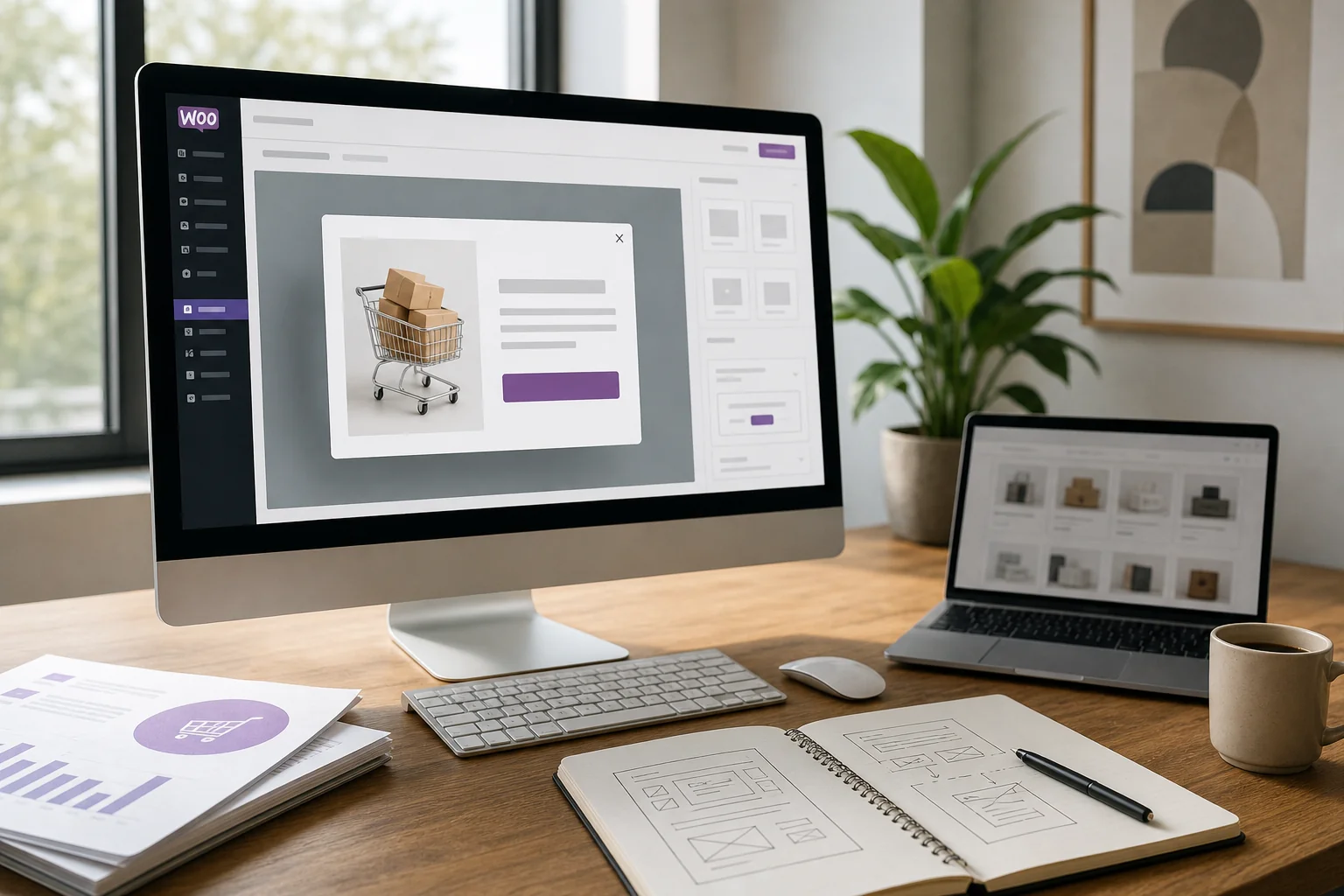
WooCommerce store owners can introduce exit-intent functionality through compatible software. The right implementation depends on whether the objective is to present a simple message, collect leads, or provide interactive rewards.
Before choosing a solution, define the campaign goal and determine how the offer should interact with existing product prices, coupon rules, and checkout functionality. A promotional experience that attracts clicks but produces unusable coupons can create frustration rather than additional purchases.
A practical setup process includes the following steps:
-
Define the conversion objective. Choose whether the campaign should encourage purchases, generate qualified email leads, or help visitors find relevant products.
-
Select an appropriate popup tool. Verify WooCommerce compatibility, exit-trigger behavior, customization options, and supported device types.
-
Choose the eligible pages. Decide whether the promotion belongs on product pages, category pages, cart pages, or other relevant parts of the store.
-
Configure the offer. Set coupon restrictions, qualifying products, usage limits, and any applicable expiration rules.
-
Prepare the message and design. Use a clear headline, concise supporting text, and an obvious call to action.
-
Test the complete experience. Verify triggering, dismissal, coupon redemption, checkout behavior, and mobile usability.
-
Measure and improve. Monitor engagement, lead generation, purchases, and the financial impact of incentives.
These are general implementation steps. Individual software providers may offer different settings and configuration workflows.
Using Funnelsio for Gamified Exit-Intent Offers
Funnelsio provides an exit-intent gamification solution intended for use with online stores. Store owners should confirm the current integration options for their specific setup, including WooCommerce support, before implementing a campaign.
The platform is designed to let businesses configure game-based promotional experiences. Store owners should review the tool's current customization and targeting options directly to confirm which elements can be adjusted and how display can be controlled.
The platform's administration interface is intended to surface performance information about exit-intent campaigns. Store owners should check the tool's current reporting and testing capabilities directly to confirm what data and analysis options are available.
This functionality makes Funnelsio relevant when the objective is to engage departing visitors with an interactive reward. It should not be confused with a complete email automation platform, a general-purpose funnel builder, or a tool that automatically resolves every cause of cart abandonment.
An Example for a WooCommerce Fashion Store
Imagine a hypothetical clothing retailer with a high number of shoppers leaving product pages without purchasing. The store wants to test whether an interactive reward can encourage more visitors to complete an order.
The retailer introduces a gamified exit-intent campaign that invites eligible departing visitors to play for a chance to receive a discount. The reward includes clear restrictions and can be redeemed through the existing WooCommerce checkout process.
To assess performance, the store compares eligible shoppers who receive the experience with a similar control group. It measures completed purchases, revenue per visitor, coupon redemption, and promotional profitability rather than assuming that game participation automatically represents success.
This scenario illustrates a possible implementation, not a documented campaign result.
Best Practices for Popup
Design and User Experience
A popup can deliver a useful offer and still create a poor experience if it blocks important content, is difficult to dismiss, or appears repeatedly. Design quality should therefore be evaluated through usability as well as visual appeal.
Keep the message focused on one primary action. Visitors should understand the benefit immediately, know what conditions apply, and have a clear way to continue browsing if they aren't interested.
The popup should also reflect the store's visual identity. Consistent typography, recognizable branding, and appropriate contrast help make the promotional experience feel like part of the website rather than an unrelated advertisement.
Keep the Message Clear and Relevant
A strong message explains what the visitor can receive and why the offer matters. For example, "Before You Go, Unlock a Reward for Your Order" communicates a clear opportunity without promising an outcome that hasn't been determined.
If the reward is a fixed discount, state its value and conditions. If customers participate in a chance-based game, avoid implying that every participant will receive the same prize.
Include one obvious primary button and a straightforward dismissal option. Complicated forms or several competing calls to action can create unnecessary friction.
Avoid Disrupting Active Shoppers
Visitors who are reading product descriptions, entering payment information, or comparing options should not be interrupted without a compelling reason.
Appropriate frequency limits can prevent the same promotion from reappearing after dismissal. Store owners should also consider excluding sensitive steps of the checkout process where an interruption could interfere with a transaction.
Google's guidance on intrusive interstitials and dialogs advises website owners to keep important page content accessible and avoid promotional overlays that obstruct the user experience. These considerations matter particularly on smaller screens.
Prioritize Mobile Usability and Accessibility
A mobile-friendly popup should fit comfortably within the available screen space, remain readable, and provide sufficiently large interactive controls.
Avoid designs that force visitors to scroll excessively simply to find the close button. Forms should request only necessary information, and promotional content should not obscure essential navigation or checkout elements.
Where possible, test keyboard accessibility, focus behavior, screen-reader compatibility, and how the popup responds to different text sizes. The experience should remain usable for customers who interact with websites in different ways.
Privacy and Consent Considerations

Exit-intent detection, email capture, and behavioral tracking raise different privacy questions. Displaying a basic promotional message does not automatically require a marketing opt-in, but collecting personal information or using non-essential tracking technologies can introduce additional obligations.
Businesses should understand what information their chosen software processes, whether cookies or similar technologies are used, where data is transferred, and how long it is retained. These details affect which notices, consent mechanisms, or other safeguards may be required.
For stores operating in the European Union, the GDPR and applicable ePrivacy rules are particularly relevant. The European Commission's guidance on direct marketing explains important requirements for using personal information in marketing communications.
Separate Reward Delivery From Marketing Permission
If visitors provide an email address to receive a coupon or another requested resource, explain clearly how the address will be used. Receiving a reward should not automatically be treated as permission to receive unrelated promotional emails.
Where consent is required for marketing, provide an appropriate way to express that choice. The business must also respect withdrawals, objections, and other applicable data protection rights.
Technical configuration alone does not guarantee compliance. Businesses should review their particular data processing activities, third-party integrations, and the legal requirements of the markets they serve.
Measuring Exit
Intent Popup Performance
A campaign's performance should be judged by meaningful outcomes, not simply by how frequently the message appears or how many people click it. High engagement can indicate that an offer attracts attention, but it doesn't prove that the campaign creates additional profitable purchases.
An exit intent popup may contribute to email subscriptions, coupon redemptions, completed orders, or other defined actions. To evaluate its contribution, retailers need clear event tracking, consistent audience definitions, and an understanding of what would likely have happened without the popup.
For WooCommerce businesses, the broader principles of measuring gamification performance include monitoring conversion-related outcomes and customer behavior over time.
Key Metrics to Monitor
Useful metrics include:
-
Popup engagement rate: The percentage of displayed popups that receive a defined interaction.
-
Email signup rate: The percentage of eligible or exposed visitors who complete the signup action, with the denominator clearly specified.
-
Coupon redemption rate: The percentage of issued or claimed coupons redeemed in qualifying orders.
-
Purchase conversion rate: The percentage of eligible visitors who complete a purchase.
-
Revenue per visitor: Revenue generated divided by the number of visitors in the measured audience.
-
Cart abandonment rate: The proportion of shopping carts that do not result in completed purchases, using a consistent calculation.
-
Promotional profitability: Revenue remaining after relevant discounts, product costs, and other variable expenses.
Different campaigns require different primary metrics. A lead-generation campaign should prioritize qualified subscriptions, while a cart recovery campaign should focus on completed purchases and profitable revenue.
Bounce rate and time spent on the site can provide additional context, but they are not reliable stand-alone measures of popup effectiveness. A visitor staying longer doesn't necessarily mean they are more likely to purchase.
Use A/B Testing to Understand Incremental Results
A/B testing compares different experiences under controlled conditions. For example, one group of visitors might receive an exit-triggered discount offer while another group sees no popup.
If the groups are comparable, the results can help indicate whether the campaign contributes incremental purchases rather than simply attracting interactions from people who would have bought anyway.
A separate test could compare a standard discount message with a gamified reward, holding other conditions as consistent as possible. Evaluate purchase conversion, revenue per visitor, coupon costs, and engagement rather than declaring a winner based on clicks alone.
Sample size, traffic quality, campaign duration, and seasonal changes all influence the reliability of the results. Small differences from a limited number of purchases may not justify a firm conclusion.
Common Exit-Intent
Mistakes to Avoid

The first mistake is assuming that every departing visitor needs a discount. Some shoppers are simply researching, while others may be concerned about product specifications or delivery conditions. Offering money off doesn't necessarily address those concerns.
Another common problem is displaying the same promotion too frequently. Repeated messages can frustrate visitors and make the store feel overly aggressive. Clear display rules and appropriate frequency limits can help preserve a better experience.
Retailers also need to avoid poorly coordinated coupon offers. If a promotional code cannot be combined with existing discounts, that restriction should be clear before the customer tries to redeem it. Likewise, advertised expiration dates and minimum spending requirements should match the actual checkout configuration.
Finally, an exit-triggered campaign shouldn't replace improvements to the underlying shopping experience. Slow pages, confusing navigation, unexpected shipping fees, and payment errors require direct solutions. A promotional popup may provide another chance to engage customers, but it cannot reliably compensate for fundamental usability problems.
Conclusion: Engage Departing Visitors
Without Interrupting Their Shopping

Exit-intent technology gives online retailers an opportunity to engage visitors at a moment when they might otherwise leave. Whether the objective is recovering a potential purchase, collecting qualified email leads, or helping customers discover relevant products, the message needs to offer genuine value.
The most effective strategy starts with understanding why people leave, choosing an appropriate incentive, and keeping the experience easy to dismiss. Careful implementation, mobile testing, privacy-conscious data collection, and meaningful performance measurement help determine whether the campaign benefits both customers and the business.
For WooCommerce stores interested in a more interactive approach, Funnelsio's gamified exit-intent solution offers a way to engage departing visitors through game-based discount rewards. Explore how it could complement your existing conversion optimization strategy and test whether its incentives support profitable customer engagement.
Questions
Answered
Common questions related to this topic.
What is an exit intent popup?
An exit intent popup is a marketing tool that appears when a user is about to leave a website. It activates based on specific user behaviors, such as mouse movements toward the exit buttons. This popup can help retain visitors by presenting them with offers or useful information.
How does exit intent popup work?
Exit intent popups work by using behavioral analytics to detect when a user shows signs of leaving the site, like moving the cursor towards the close button. This technology allows businesses to deliver timely messages that can engage users right before they exit, potentially increasing conversion rates.
Why are exit intent popups effective for reducing cart abandonment?
Exit intent popups are effective because they provide an opportunity to engage users who are about to abandon their carts. By offering incentives like discounts or reminders of items left in the cart, these popups can persuade users to stay and complete their purchases.
When should I use an exit intent popup?
You should use an exit intent popup when you notice a high bounce rate or cart abandonment rate on your
Ready To GrowThis Into Results?
Discover how exit-intent technology works, what triggers it on desktop and mobile devices, and how to use targeted offers, gamified rewards, and A/B testing to engage departing visitors without disrupting their shopping experience.
Prefer to reach out directly? We'll get back to you as soon as possible.
Contact MASS DATA Today