HomeBlogGamificationEcommerceGift With Purchase: When a Free Gift Works Better Than a Percentage Discount

Gift With Purchase: When a Free Gift Works Better Than a Percentage Discount

MASS DATA Insights

Gift With Purchase: When a Free Gift Works Better Than a Percentage Discount

Discover when a complimentary product can outperform a percentage discount. Learn how to calculate gift costs, choose meaningful rewards, set profitable spending thresholds, configure WooCommerce promotions, and measure results.

Discounts are one of the most familiar ways to encourage online purchases, but reducing prices isn't always the most profitable approach. A well-planned gift with purchase promotion gives shoppers something extra without automatically lowering the price of the products they're buying. For e-commerce retailers, this can be an appealing alternative when the goal is to protect margins, introduce new products, or create a more memorable shopping experience.
Gift With Purchase: When a Free Gift Works Better Than a Percentage Discount

Overview

However, free gifts aren't automatically better than discounts. Their effectiveness depends on customer preferences, product costs, promotional thresholds, and how clearly the offer is communicated. This guide explains when a GWP promotion makes financial sense, how to choose the right gifts, and how WooCommerce stores can implement and measure these incentives.

What Is a
Gift With Purchase?

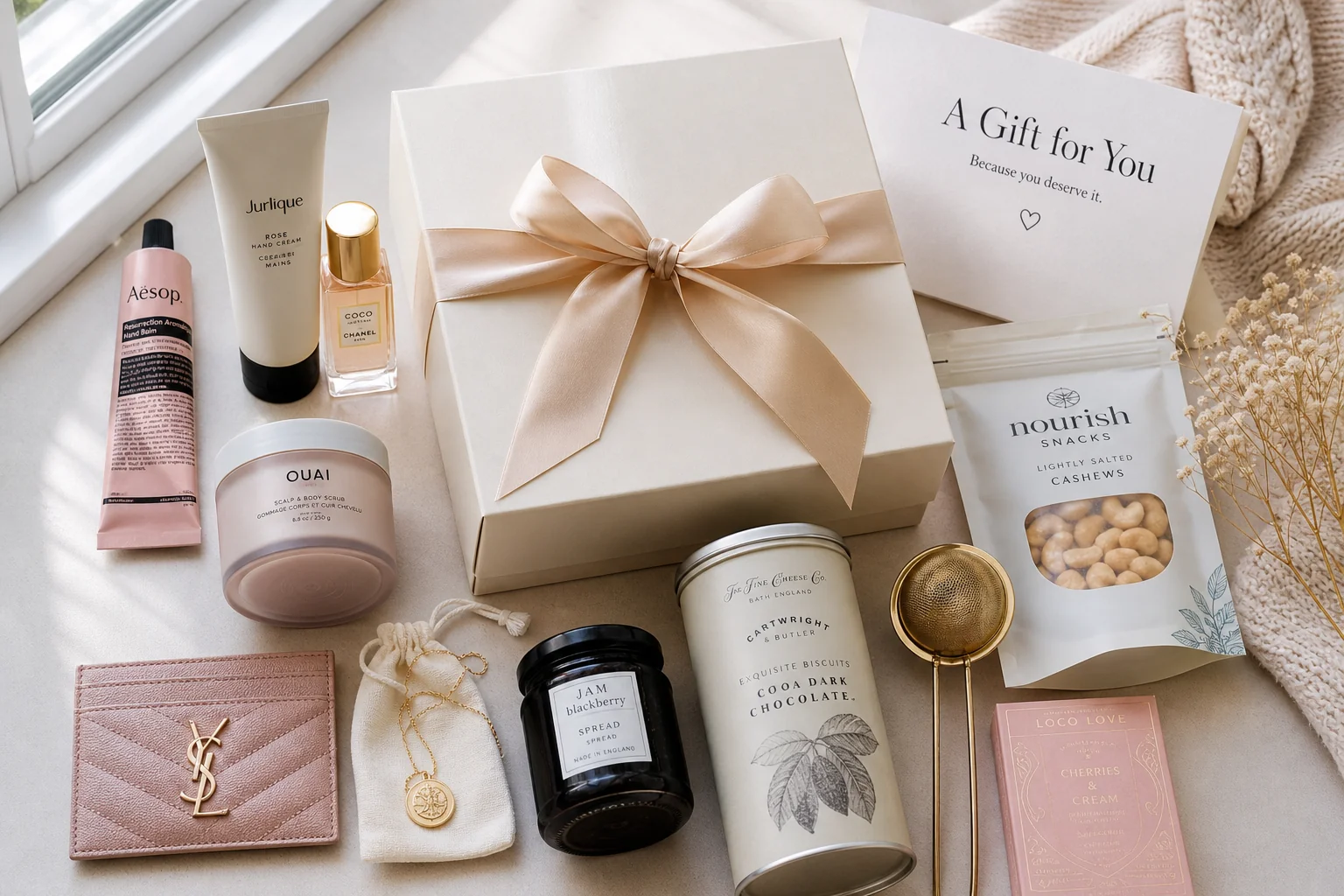
A gift with purchase (GWP) is a promotional offer in which a customer receives an additional product at no extra charge after meeting specified purchase conditions. The requirement might be buying a particular product, selecting something from an eligible collection, or spending a minimum amount.

Unlike a percentage discount, which reduces the amount a customer pays, a GWP offer adds an item to the order. This creates a different kind of value proposition: rather than saving money directly, the shopper receives something additional.

For example, a cosmetics retailer could offer a complimentary travel-sized moisturizer with orders above €60. The customer pays the normal price for the qualifying products and receives the sample as an additional benefit. The promotion can encourage customers to explore new products while giving them a reason to reach the minimum spending requirement.

The Main Types of Free Gift Promotions

Not every GWP offer needs a spending threshold. Businesses can structure rewards around different purchasing behaviors, depending on their objectives.

Common formats include:

  • Free gift with any order: Every qualifying purchase includes a selected complimentary item.

  • Minimum-spend gift: Customers receive a reward after reaching a specified basket value.

  • Product-specific gift: Purchasing an eligible product unlocks a related accessory or sample.

  • Category-based gift: Customers buying from a selected collection receive an additional item.

  • Tiered rewards: Different qualifying spending levels unlock different gifts.

  • Gift selection: Eligible customers choose one reward from a predefined collection.

A store should choose the simplest format that supports its objective. Complicated eligibility rules can reduce the appeal of an otherwise attractive promotion.

Gift With Purchase vs.
Percentage Discounts: Which Works Better?

Percentage discounts provide an immediate and easily understood financial benefit. A customer buying €80 worth of products with a 15% discount saves €12, which can be particularly attractive when price is the main reason for hesitation.

A free gift works differently. It provides an additional item whose perceived value may exceed the retailer's acquisition and fulfillment cost. This can be useful when a business wants to preserve its advertised selling prices while offering something that customers consider desirable.

The better strategy depends on the audience and product category. A highly price-sensitive shopper may prefer an immediate discount, while someone purchasing premium skincare might appreciate a complementary product they would otherwise have to buy separately.

How Free Gifts Can Protect Profit Margins

Consider a hypothetical online store selling an order worth €60. After product costs and other relevant variable expenses, the order generates €24 in contribution profit before any promotional incentive.

If the retailer offers a 10% discount, the customer saves €6 and the contribution profit falls to €18, assuming all other costs remain unchanged.

Now imagine the retailer offers a complimentary product instead. The gift costs €3 to acquire, and the additional packaging and fulfillment expense is €0.50. The total incremental cost is €3.50, leaving €20.50 in contribution profit.

<box gap={2}> <grid columns={2} gap={3}> <grid-item> <box border radius="lg" padding={3} gap={1}> <text color="secondary" weight="medium" size="xs">10% discount</text> <title size="xl" color="default" tabularNums>€18.00</title> <caption>Contribution profit per order</caption> </box> </grid-item> <grid-item> <box border radius="lg" padding={3} gap={1}> <text color="secondary" weight="medium" size="xs">Free gift costing €3.50</text> <title size="xl" color="default" tabularNums>€20.50</title> <caption>Contribution profit per order</caption> </box> </grid-item> </grid> <caption>Illustrative comparison only. It assumes an identical €60 paid order and €24 contribution profit before the incentive, excluding any changes in conversion rate or basket size.</caption> </box>

In this simplified example, the gift leaves €2.50 more contribution profit per order. However, that doesn't prove it will generate better overall results. The discount might attract substantially more orders, while the gift might appeal only to a smaller audience.

The correct decision requires comparing total incremental contribution profit, not just the cost of the incentive.

When a Percentage Discount Is the Better Choice

A discount may be more effective when customers are primarily comparing prices or when the retailer needs to clear inventory quickly. It can also be easier to communicate because customers immediately understand the monetary saving.

For example, a fashion retailer clearing discontinued winter clothing might benefit more from a transparent price reduction than from adding a small accessory to each order. If customers specifically want a lower price, an unrelated gift may not influence their decision.

Discounts also avoid the additional inventory handling required for physical gifts. For low-margin products or businesses with high fulfillment costs, this operational simplicity can be an important consideration.

When a Gift With Purchase
Makes More Sense Than a Discount

When a Gift With Purchase Makes More Sense Than a Discount

A free gift is particularly attractive when it provides meaningful value at a manageable cost. The strongest campaigns usually feature products that complement the original purchase, encourage discovery, or improve the overall customer experience.

This approach can also help businesses avoid repeatedly training customers to expect lower prices. Instead of reducing the selling price every time the store wants to run a promotion, a retailer can introduce occasional added-value incentives.

However, a free product doesn't automatically create customer loyalty. Repeat purchases still depend on product satisfaction, reliable delivery, appropriate pricing, and the quality of the broader shopping experience.

Introducing New Products Through Samples

Product samples are a natural fit for beauty, skincare, cosmetics, specialty foods, and other categories where customers may want to try something before buying a full-size version.

For example, a skincare retailer could include a sample of a newly launched moisturizer with qualifying orders. Customers who enjoy the sample may later consider purchasing the full-size product.

This approach supports product discovery without requiring the customer to commit to an unfamiliar product immediately. To evaluate its value, track subsequent purchases of the sampled item rather than assuming the sample will automatically produce long-term loyalty.

Encouraging Higher Basket Values

A minimum-spend gift can encourage customers to add another item when their basket is close to the qualifying threshold. For example, someone with €54 in their cart might consider purchasing a €10 complementary product to receive a gift available on orders above €60.

The strategy works best when the additional purchase is useful and the gift is relevant. Customers shouldn't feel pressured to buy unnecessary items simply to qualify for a low-value reward.

A clearly communicated gift threshold can help shoppers make their decision. The retailer should also check whether the additional basket value covers the gift cost while maintaining an acceptable contribution margin.

Strengthening the First Purchase Experience

For new customers, a thoughtful free gift can help differentiate the shopping experience. A complimentary item related to the original purchase may introduce another product category or give customers a reason to explore the brand again.

A retailer selling premium coffee, for instance, might include a small sample of another blend with a qualifying order. If the customer enjoys it, the sample may support future product discovery.

This can complement a broader strategy for turning one-time buyers into repeat customers. However, the gift should be treated as one potential contributor to retention, not as a substitute for product quality and reliable service.

How to Set
a Profitable Gift Threshold

Choosing the right spending threshold is one of the most important decisions in a GWP campaign. If the requirement is too low, the retailer may distribute gifts to customers who would have purchased anyway. If it's too high, shoppers may consider the offer irrelevant or unrealistic.

Start by reviewing average order value (AOV), median basket value, contribution margins, and the distribution of customer spending. Averages can be misleading when a small number of unusually large purchases significantly influence the result.

For example, a store with an AOV of €52 could consider testing a €65 minimum-spend gift. The threshold is high enough to encourage an additional purchase for some customers but may still be accessible to a meaningful portion of the audience.

Calculate the Real Cost of the Free Gift

The gift's purchase price is only part of the cost. Retailers should also account for any additional packaging, storage, handling, shipping, and other relevant expenses.

A gift costing €2.50 from a supplier may cost more to deliver once these expenses are included. If the item increases parcel weight or requires special packaging, the incremental cost could become substantial.

The decision should be based on the actual cost to the business rather than the product's advertised retail value. A gift with a €15 selling price might have a lower acquisition cost, but using the retail price alone would distort the profitability calculation.

Choose a Threshold That Encourages Useful Additions

Suppose a hypothetical store has an average order value of €50 and wants to test a free gift at €65. Customers with baskets between €50 and €64 may have an incentive to consider complementary products.

However, raising the threshold doesn't automatically increase revenue. Some visitors may leave without purchasing, while others may add products only to qualify for the gift and return them later.

Test the threshold against a comparable control group and monitor purchase conversion, average order value, product returns, and contribution profit. The most effective threshold is the one that supports profitable customer behavior, not necessarily the one that produces the largest baskets.

How to Choose
the Right Free Gift

How to Choose the Right Free Gift

The perceived value of the gift is just as important as its cost. A cheap item that customers don't want may add fulfillment expenses without making the promotion more appealing.

Ideally, the reward should relate to the store's products or the shopper's original purchase. This increases the likelihood that customers will view the gift as useful rather than as an unnecessary promotional extra.

Product quality also matters. A low-quality gift can create disappointment, particularly when the brand positions itself as premium or emphasizes dependable products.

Choose Complementary Products

A relevant gift makes the shopping experience feel more considered. An online stationery store might offer a matching pen with a qualifying planner purchase, while a beauty retailer could provide a travel-sized cleanser with selected skincare products.

These examples connect the reward to the original purchase. They also create an opportunity to introduce customers to another product they may want to buy later.

Avoid choosing gifts solely because they are inexpensive or overstocked. Clearing inventory can be a secondary benefit, but the product still needs to be appropriate for the intended customer.

Consider Customer Choice

Allowing customers to select one gift from a small group can make a promotion more relevant. For example, a cosmetics retailer might offer a choice between two sample products with different uses.

Customer choice reduces the risk of giving shoppers something they already own or cannot use. However, it introduces additional complexity to inventory management and the checkout process.

Keep the available choices limited and easy to understand. If a selected gift becomes unavailable, the website should update eligibility and availability accurately.

How to Set Up a
Gift With Purchase in WooCommerce

WooCommerce provides built-in coupon functionality for percentage and fixed-value discounts. However, automatically adding a separate product to the cart for free based on a purchase or minimum-spend condition generally requires an extension or custom development.

This distinction is important because a discount coupon and a complimentary product are not technically the same thing. A store may be able to discount an existing item through core functionality without having a complete system for automatically issuing, tracking, and removing gift products.

WooCommerce offers extensions designed specifically for free-product campaigns. The official marketplace documentation for Free Gifts for WooCommerce describes manual and automatic gifts, spending-based eligibility, and coupon-triggered offers.

Configure Automatic Free Gifts

With an appropriate extension, store owners can define conditions under which a product is added to an eligible customer's cart at no additional charge.

For example, a rule could add one sample product when the basket reaches €65 in qualifying merchandise. Depending on the extension, the retailer may be able to restrict eligibility by product, category, order value, customer history, or coupon usage.

The configuration should also address what happens when the customer removes items and falls below the threshold. A gift that remains in the basket after the original qualifying conditions are no longer met could create unintended costs.

Configure Coupon-Based Gifts

Some retailers prefer customers to enter a promotional code before receiving a free product. This can work well for targeted email campaigns, loyalty offers, or promotions advertised to a specific audience.

WooCommerce's Smart Coupons documentation explains how an extension can link free products to a coupon.

A coupon-based campaign may be easier to attribute to specific marketing channels, but customers should understand that they need to enter a code. Hidden redemption requirements can create unnecessary frustration.

Before launching, test the coupon with eligible and ineligible carts. Check whether other promotions can be combined with the offer and verify that all conditions behave as intended.

Test Inventory, Returns, and Checkout Behavior

Free gift promotions require reliable inventory management. The store should track how many promotional items remain available and stop presenting the offer when stock is exhausted, unless an appropriate alternative has been prepared.

Returns and cancellations also need attention. If a customer returns qualifying merchandise, the business should have a clear and lawful policy for handling the associated gift. These conditions should be communicated before purchase when they materially affect the offer.

Finally, test the complete customer journey on desktop and mobile. Confirm that the gift is displayed correctly, the order total is accurate, and the reward appears in the order record so fulfillment staff can include it.

How to Promote a Free
Gift Offer Without Disrupting Shoppers
How to Promote a Free Gift Offer Without Disrupting Shoppers

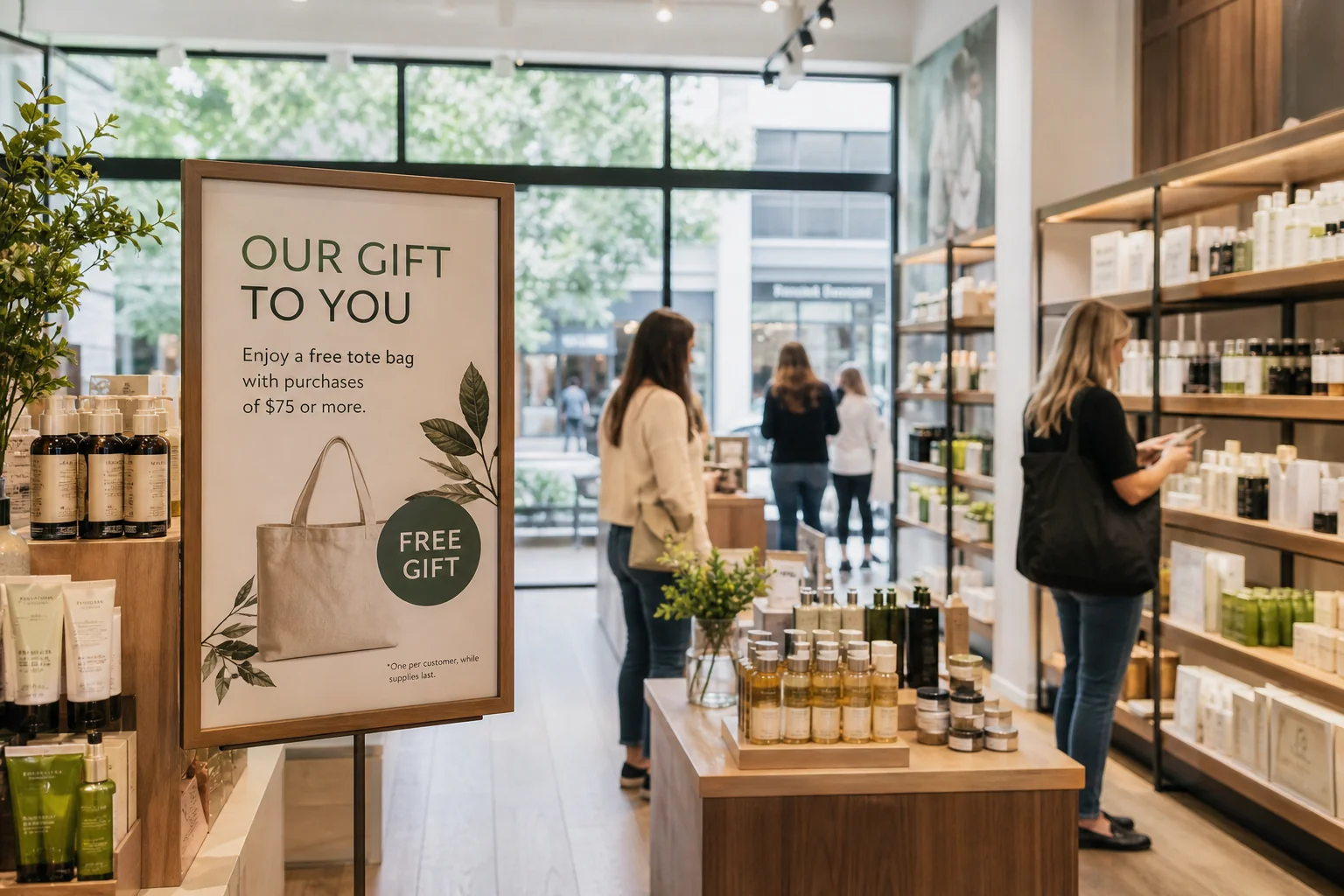
Even a well-designed offer can underperform if customers don't know it exists. Promotional messaging should communicate what the gift is, how customers qualify, and whether any restrictions apply.

A simple banner can work well when the reward is available throughout the store. Product-page messages may be more appropriate for gifts attached to particular items or categories.

For example, "Receive a Complimentary Travel-Size Moisturizer With Skincare Orders Over €60" explains the benefit and eligibility more clearly than a vague message promising a surprise reward.

Use Email Marketing and Seasonal Campaigns

Email provides a useful channel for introducing gift offers to customers who have chosen to receive relevant marketing communications. A retailer might highlight an exclusive sample during a product launch or introduce a complimentary seasonal accessory during a holiday promotion.

The message should emphasize why the gift is useful rather than relying exclusively on urgency. Include a direct link to eligible products and explain the threshold in a way customers can understand before checkout.

Seasonal gift campaigns can also complement relevant Christmas popup ideas, provided the different incentives are coordinated and customers aren't overwhelmed with competing offers.

Use Cart Messages Carefully

A cart progress message can show customers how close they are to qualifying for a reward. For example, a shopper with €55 in eligible merchandise could see a notice explaining that an additional €10 qualifies them for the gift.

This type of message is most helpful when it reflects the current basket accurately and updates after changes. It should not obscure checkout controls or encourage shoppers to add unrelated products.

Display conditions, progress messages, and automatic gift addition depend on the selected WooCommerce extensions. They should not be assumed to be available through every promotional plugin.

Can Gamification Complement
Free Gift Promotions?

A complimentary product and a gamified reward both introduce added value, but they serve somewhat different purposes. A free gift promotion normally rewards a qualifying purchase, while an interactive promotional game may engage a visitor before they decide whether to buy.

For example, a store could advertise a complimentary sample with qualifying purchases while separately using an interactive exit-intent offer to engage visitors who appear ready to leave. These experiences can coexist, provided customers understand the conditions and rewards don't unintentionally overlap.

This distinction matters when selecting marketing technology. Software designed to distribute discount coupons through games isn't automatically a system for adding physical gifts to WooCommerce orders.

Where Funnelsio Fits Into the Strategy

Funnelsio provides gamified exit-intent popups for e-commerce stores, including WooCommerce integration. Its game-based approach invites departing visitors to participate for a chance to receive a discount coupon, offering an interactive alternative to a conventional exit message.

This can complement a free gift campaign by creating an additional engagement opportunity for visitors who are considering leaving. However, Funnelsio's verified functionality centers on gamified coupon rewards, lead collection, and performance tracking. It should not be presented as a dedicated physical-gift management system.

Retailers considering both approaches should evaluate whether the incentives work together commercially. If a customer can receive a free product and a substantial discount on the same order, the combined promotional cost may exceed the intended budget.

For a more detailed explanation of the technology, the exit-intent popup guide covers triggering, user experience, and appropriate measurement.

How to Measure Gift
With Purchase Campaign Performance

How to Measure Gift With Purchase Campaign Performance

A successful gift with purchase campaign should generate meaningful business value rather than simply distributing more complimentary products. Higher average order value may be encouraging, but it doesn't establish that the promotion has increased profitability.

Retailers need to compare purchase behavior, reward costs, and the contribution generated by qualifying orders. The analysis should also account for customers who would have purchased without receiving an incentive.

Where possible, use a controlled experiment. For example, one group of eligible shoppers could see the free gift promotion while another receives the regular shopping experience. A separate test could compare the gift with a discount of similar expected cost.

Key Metrics to Track

Important measures include:

  • Purchase conversion rate: The percentage of eligible visitors who complete an order.

  • Average order value: The average value of completed orders, measured consistently.

  • Gift qualification rate: The percentage of eligible orders that meet the promotional conditions.

  • Incremental gift cost: The actual acquisition and fulfillment expenses associated with the rewards.

  • Contribution profit per visitor: Contribution profit divided by eligible visitors, helping account for differences in conversion and promotional costs.

  • Second purchase rate: The percentage of first-time buyers who make another qualifying purchase within a defined period.

  • Sample-to-product conversion: The proportion of customers receiving a sample who subsequently purchase the corresponding full-size product, when this can be reliably measured.

These metrics serve different purposes. A high qualification rate might indicate that the threshold is easily reached, while a rising average order value could suggest that customers are adding products to receive the reward.

Neither result proves incremental value without an appropriate comparison. For a broader approach to performance measurement, WooCommerce conversion and engagement metrics provide useful context.

Compare Profitability, Not Just Promotional Engagement

Suppose a hypothetical retailer tests a complimentary sample against a 10% discount. The gift version generates fewer orders but a higher contribution profit per order, while the discount produces more transactions at a lower margin.

The winner depends on total incremental profit across comparable traffic groups. If the discount attracts enough additional profitable orders, it could outperform the gift despite costing more per transaction.

This is why businesses should avoid assuming that free gifts always protect profitability better than discounts. The impact varies according to the reward, audience, product margins, purchase behavior, and implementation.

Common Gift With
Purchase Mistakes to Avoid

One common mistake is choosing a gift that customers don't consider valuable. A product may be inexpensive and easy to distribute, but it won't necessarily influence purchasing behavior. The reward should provide a relevant benefit rather than simply increase the number of items shipped.

Another problem is setting a threshold without considering typical basket values. A minimum spend that is too high may discourage customers, while one that is too low can create costs without encouraging additional purchases. Threshold testing and contribution-margin analysis are essential.

Retailers should also avoid making unsupported claims about free products. In the United States, the FTC's guidance on the use of the word "free" emphasizes that material conditions should be clearly disclosed. Other markets have their own consumer protection rules, so businesses should verify relevant local requirements.

A free gift shouldn't be financed through a misleading increase in the regular price of the qualifying product. The promotion must provide the genuine benefit that customers are led to expect.

Finally, poor inventory coordination can damage an otherwise successful campaign. If the advertised gift is no longer available, the website should communicate that change rather than continuing to promise something the store cannot deliver.

Conclusion: Choose Added Value
When It Makes Commercial Sense

Conclusion: Choose Added Value When It Makes Commercial Sense

A thoughtful gift with purchase promotion can provide customers with something useful while allowing retailers to maintain their normal product prices. Complimentary samples, relevant accessories, and carefully selected rewards can support product discovery, encourage larger baskets, and create a more engaging shopping experience.

The strategy is most effective when the gift offers genuine value at a sustainable cost. Before launching, review customer preferences, establish a realistic spending threshold, configure the promotion correctly, and measure incremental contribution profit against a suitable alternative.

For WooCommerce retailers interested in adding interactive incentives to their promotional strategy, explore Funnelsio's gamified exit-intent solution. Its game-based coupon rewards can complement free gift campaigns by engaging visitors before they leave, giving businesses another opportunity to test which incentives work best for their audience.

Questions
Answered

Common questions related to this topic.

What is gift with purchase?

A gift with purchase is a promotional strategy where customers receive a free item upon making a qualifying purchase. This technique is aimed at enhancing the shopping experience and encouraging larger purchases, ultimately boosting customer satisfaction.

How does gift with purchase work?

Gift with purchase works by establishing a minimum spending requirement, known as the gift threshold, that customers must meet to qualify for the complimentary item. This approach incentivizes customers to spend more while enhancing perceived value.

Why should I choose a gift with purchase over a discount?

Choosing a gift with purchase can create a more emotional connection with customers compared to simple discounts. It can lead to increased customer loyalty and a more memorable shopping experience, enhancing the likelihood of repeat business.

When is the best time to run a GWP promotion?

The best time to run a gift with purchase promotion is during peak shopping seasons, like holidays or special events, when customers are more likely to spend. Timing can significantly influence the promotion's effectiveness in driving sales.

Can I use a gift with purchase for low-cost items?

Yes, gift with purchase strategies can be effective for low-cost items as well. A well-chosen free gift can encourage customers to buy everyday products, increasing the overall average order value.

Should I advertise my gift with purchase offer?

Absolutely. Promoting your gift with purchase offer through email marketing, social media, and in-store signage can significantly increase visibility and attract more customers, ensuring the promotion reaches its full potential.

Free Strategy Call

Ready To GrowThis Into Results?

Discover when a complimentary product can outperform a percentage discount. Learn how to calculate gift costs, choose meaningful rewards, set profitable spending thresholds, configure WooCommerce promotions, and measure results.

✓Opportunity Assessment
✓Channel Review
✓Growth Recommendations
✓No Obligation
OR

Prefer to reach out directly? We'll get back to you as soon as possible.

Contact MASS DATA Today


Leave a Reply

Your email address will not be published. Required fields are marked *